Mercury Retrograde July 2026: Uranus-Pluto Trine Cosmic Reset
By Ravi Khorana

More Than a Retrograde
Most Mercury retrogrades are personal-scale events — a miscommunication here, a delayed contract there, a deeply inconvenient moment to lose your car keys. July 2026 is built differently. The familiar retrograde rhythm is running simultaneously with a rare outer-planet configuration that some astrologers believe hasn't appeared in its current form for thousands of years.
Think of it this way: Mercury retrograde is handling the intimate editing — your crossed wires, your unfinished emotional conversations, the text you probably shouldn't send — while the outer planets are quietly rewriting the collective operating system beneath everyone's feet. That overlap is what makes this month feel less like a standard "back up your files" retrograde and more like a genuine inflection point.
The "cosmic reset" framing is editorially tempting, and every expert we consulted found substance behind the label, even as they cautioned against treating it as a single dramatic event rather than the opening chapter of a multi-year process.
Mercury Retrograde in Cancer: The Messenger Goes Home
Mercury stations retrograde on June 29, 2026, in Cancer and turns direct on July 23. Cancer is the sign of memory, emotional security, and the stories we carry about home and belonging. Mercury isn't exactly comfortable here — this isn't quicksilver commerce or sharp analytical debate. This is Mercury as the family archivist, rifling through boxes in the attic.
From a Vedic (Jyotish) perspective, Budha (Mercury) in retrograde isn't simply "bad." The classical text Brihat Parashara Hora Shastra describes a retrograde planet as vakri — gaining an intensified inner force that operates uchcha-vat, with qualities resembling exaltation. The energy turns inward, compelling revision rather than advancement. In the sidereal zodiac, this retrograde moves through the nakshatras of Pushya and toward Aslesha, which carries potent symbolism: Pushya holds the power of spiritual nourishment (brahma varchasa), while Aslesha is associated with serpent wisdom, ancestral memory, and the transformation of poison into medicine.
The Western psychological lens, drawing on the Liz Greene and Howard Sasportas tradition, reads this as Mercury in its role as psychopomp — the messenger who descends into the underworld not to deliver news but to retrieve it. Cancer retrograde Mercury activates body-memory, the family-of-origin script running below conscious awareness, and the question you rarely ask out loud: what does safety actually feel like?
Both traditions converge on one point: this retrograde is asking you to deal in feelings, not facts.
Key takeaway: This isn't a retrograde for fixing your Wi-Fi. It's a retrograde for reconsidering the emotional architecture of your life — what "home" means, what stories you inherited, and which ones still fit.
The Barbault Basket and the Uranus-Pluto Trine: The Bigger Architecture
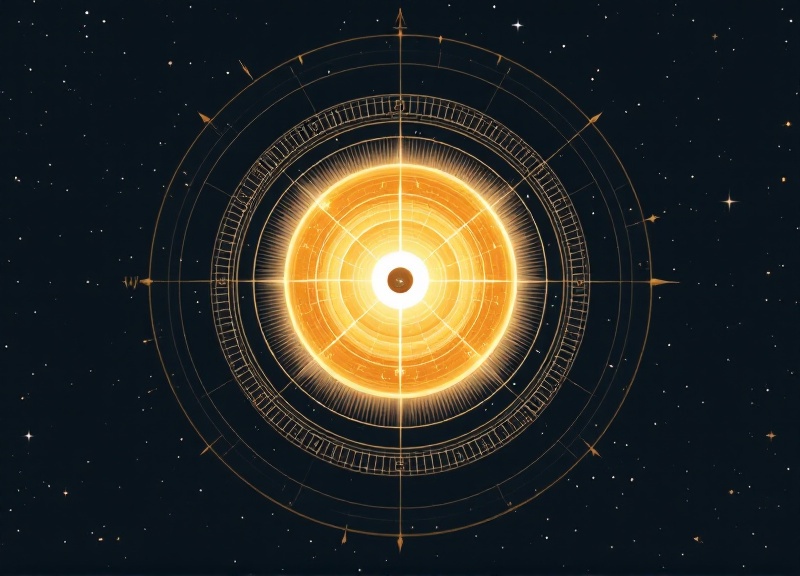
Here's where July 2026 gets genuinely unusual. A mini grand trine forms among Uranus in Gemini, Neptune in Aries, and Pluto in Aquarius — all clustering near 4 degrees of their respective signs. Jupiter in Leo joins the geometry, creating what some astrologers call the Barbault Basket, named after French mundane astrologer André Barbault, who spent decades tracking correlations between outer-planet cycles and civilizational turning points.
A necessary correction: the headline "Uranus-Pluto trine" is a simplification. What's actually happening is the early passes of a multi-year Uranus-Pluto trine cycle (exact passes continuing through approximately 2028-2031), coinciding with this rare broader alignment. July 2026 is an opening movement, not a standalone event.
Historical context matters here. The previous Uranus-Pluto hard aspects — the squares of 2012-2015 — coincided with the Arab Spring, Occupy Wall Street, and the Snowden revelations. Those were squares: friction-based, confrontational. A trine carries the same transformative charge but delivers it as revelation rather than rupture. The 1960s Uranus-Pluto conjunction in Virgo produced the counterculture, the civil rights acceleration, and the early seeds of the information revolution. The trine energy allows that kind of Plutonian transformation to flow rather than break things open.
From a Jyotish standpoint, classical texts don't address Uranus, Neptune, and Pluto directly — these are the aprakasha grahas (shadowed or occult significators) that contemporary Vedic practitioners increasingly integrate as markers of collective karmic shifts. The pattern carries echoes of what Vedic astrology calls mahayoga — a configuration of such scope that its effects register not merely in individual charts but in the Kalachakra (the wheel of time) itself. Conservative Parashari practitioners would note that this integration, while useful, stands outside classical sanction.
Key takeaway: The retrograde is the personal story. The outer-planet configuration is the civilizational one. July 2026 is one of those rare months where both narratives are running simultaneously — and interacting with each other.
The Cazimi Flash: July 12 as the Still Point
Around July 12, Mercury crosses the Sun in what Western astrology calls a cazimi — the moment the messenger enters "the heart of the king." Traditional Hellenistic astrologers treat this as a flash of unusual clarity inside the retrograde fog.
Vedic astrology offers a complementary but slightly different reading. When Mercury approaches within one degree of the Sun, it enters combustion (moudya-dosha) — a weakening of external expression. But at the precise conjunction, a Surya-Budha yoga forms: insight arrives not through the usual Mercurial channels of data and logic but through a sudden illumination from the solar center, the Sun as Atmakaraka (significator of the soul). The traditions overlap on the outcome — piercing clarity — but differ on the mechanism.
What most analysts miss is the narrative arc this creates with the Barbault Basket's peak intensity around July 19-21. The sequence has a classical mythological shape: descent, illumination, emergence. Mercury descends into Cancer's emotional depths. The cazimi at mid-month is the underworld moment. Days later, the outer planets peak. Then Mercury stations direct on July 23. The retrograde isn't interrupting the collective reset — it's preparing you for it. You can't step through a doorway this significant at full speed.
Where the Traditions Agree — and Where They Don't
All four of our expert perspectives converge on the core message: July 2026 is a period for inward revision that feeds into a larger collective transformation. They agree the cazimi on July 12 is the month's pivot point, and they agree the post-shadow through August 7 is the real integration window.
The tensions are more interesting:
- Vedic traditionalists caution that applying outer planets (Uranus, Neptune, Pluto) to Jyotish frameworks is a modern adaptation without classical sanction. The nakshatra and dasha analysis carries full traditional authority; the Barbault Basket does not.
- Psychological astrologers warn against the nostalgic pull of Cancer retrograde — the temptation to rewrite memory to feel safer rather than truer. Jung called this identification with the progressive drive's opposite: retreating into the known wound rather than facing the unknown healing.
- Cultural analysts note that statistical research on Mercury retrograde specifically remains inconclusive — a 2016 University of Vienna study found no significant market correlation. But the sociological effect is real: millions of astrology-aware people simultaneously slowing down, double-checking, and pausing commitments creates measurable behavioral shifts regardless of celestial mechanics.

Key Dates and Phases at a Glance
| Date | Event | What It Means for You |
|---|---|---|
| June 29 | Mercury stations retrograde in Cancer | Slow down. Revisit unfinished emotional conversations. |
| June 29 – July 12 | Pre-cazimi excavation period | Identify the pattern or conversation that keeps circling back. |
| July 12 | Mercury cazimi (conjunct Sun in Cancer) | A flash of clarity. Record what surfaces — don't act on it yet. |
| July 19 – 21 | Barbault Basket peak; outer-planet alignment intensifies | Connect your personal insight to the bigger story unfolding around you. |
| July 23 | Mercury stations direct at 16° Cancer | The forward turn. Begin integrating — gently. |
| July 23 – Aug 7 | Post-retrograde shadow period | Soft-launch decisions. Let new beginnings breathe before committing fully. |
| Aug 8+ | Shadow clears | The clean window for contracts, launches, and new structures. |
Practical Guidance: What to Actually Do
A Cross-Tradition Practice for July 12
On the day of the cazimi, set aside twenty minutes. Sit with paper — physical paper, not a screen. Cancer asks for the embodied and the tactile. Write answers to three questions without editing:
- What conversation have I been avoiding?
- What memory keeps returning that I haven't yet learned from?
- What would I say to the person I was one year ago?
Fold the paper. Don't read it. Open it on July 23 when Mercury stations direct. The gap between who wrote those words and who reads them is the reset this month has been building toward.
Vedic Remedies (Upaya)
- Recite the Budha Gayatri (Om Saumyarupaya Vidmahe) 108 times on Wednesdays during the retrograde window.
- Donate green moong dal to educational institutions — this honors Budha's significations and corrects communication karma.
- The Pushya nakshatra window (July 12-23) is classically considered among the most auspicious for beginning spiritual practices and performing ancestral rites (pitru tarpana).
Timing Decisions
Classical Muhurta (electional astrology) advises against signing contracts, launching ventures, or establishing new communication structures during the retrograde. August 8 onward is the cleaner window for initiating what July has clarified.
Relationships Under This Sky
Mercury retrograde in Cancer targets the places where emotional communication has been indirect — where the family-of-origin script still runs below awareness, and where security has been negotiated through avoidance rather than honest contact. Expect the return of conversations that were tabled and the sudden relevance of domestic arrangements you'd put on autopilot.
The outer-planet configuration amplifies the stakes: relationships formed or tested in July 2026 are being evaluated against a template that is itself changing. This doesn't have to be destabilizing. Approached consciously, it's more like a relational audit conducted under unusual clarity. If you're curious about how this plays out in your specific chart, your birth chart placements in Cancer, Gemini, and Aquarius will tell you where the pressure lands. For partnership dynamics, your compatibility chart can show which shared patterns are up for renegotiation.
Frequently Asked Questions
Is July 2026 really a once-in-a-lifetime event?
The Mercury retrograde? No — those happen three to four times a year. But the specific outer-planet geometry of the Barbault Basket, with Uranus, Neptune, Pluto, and Jupiter aligning near the same degree across compatible signs, is genuinely rare. Some astrologers place the last comparable configuration thousands of years ago, though the exact claim deserves careful verification. The Uranus-Pluto trine itself will recur in exact passes through 2028-2031 — so July 2026 is an opening chapter, not the whole book.
Should I avoid signing contracts during Mercury retrograde in July 2026?
Both Vedic Muhurta and Western electional astrology advise caution with new agreements during retrograde periods. This doesn't mean the world stops — it means you double-check terms, expect revisions, and avoid treating any contract as final until after the post-shadow clears around August 8. Review and renegotiation of existing agreements, however, is exactly what this window supports.
How do I know if this transit hits my chart personally?
Check whether you have planets or angles near 4 degrees of Gemini, Leo, Aquarius, or Aries (for the outer-planet pattern) or near 16-21 degrees of Cancer (for the retrograde path). Running your birth chart will show you exactly where these transits land in your houses. Cardinal sign placements (Cancer, Capricorn, Aries, Libra) will feel Mercury's retrograde most directly.
Does Vedic astrology read Mercury retrograde differently than Western?
Yes, and the difference is fascinating. Western astrology tends to emphasize the disruption and review cycle. Jyotish treats a retrograde planet as vakri — intensified in inner force, almost exalted in its capacity for inward work. The Vedic take is less "something's broken" and more "the energy has turned inward for a reason." Both agree that retrograde periods favor revision over initiation.
What's the single most useful thing I can do during this transit?
Every expert we consulted converged on the same advice: use July 12 as your anchor. Record whatever clarity surfaces during the cazimi — write it down, speak it aloud, capture it somehow. Then hold it without acting until Mercury stations direct on July 23. The insight is the gift. The patience is the practice.
Ready to explore your cosmic blueprint?
Discover what the stars reveal about your unique path.
Check Your Transit Chart

