Saturn & Neptune in Aries + Uranus in Gemini 2026 Guide
By Ravi Khorana

Why 2026 Is Not a Normal Year
Three outer planets shifting signs almost simultaneously—it's genuinely rare by any astronomical measure. By the middle of 2026, Saturn will have settled into early Aries. Neptune will join it, forming an exact conjunction at the very first degree of the zodiac. Meanwhile, Uranus crosses into Gemini for a seven-year stay. Seriously.
This situation isn't your typical Mercury retrograde panic. Exactly. These are the slowest-moving bodies in our solar system. When they shift signs nearly at once, the astrological weather isn't changed for weeks but for years. Neptune alone last moved through Aries in the 1860s. Uranus in Gemini? The early 1940s was the last time. Both changes happening alongside a Saturn-Neptune conjunction at the World Axis — 0° Aries, the tropical zodiac's absolute starting point — makes this a civilizational inflection point. Astrologers from every tradition agree: it's not a momentary weather pattern.
Key takeaway: The individual transits matter, but it's their convergence that makes 2026 historically unusual. Think of it as three rivers changing course at the same time.
The Saturn-Neptune Conjunction: A 36-Year Cycle Resets
The gravitational center of 2026's astrology is the Saturn-Neptune conjunction at 0° Aries, exact in February 2026. This closes a cycle that opened with their last conjunction in Capricorn in 1989–1990 — years that brought the fall of the Berlin Wall, the dissolution of the Soviet Union, and the beginnings of a post-Cold War dream of unified global institutions.
That Capricorn conjunction asked: How do we build lasting structures from shared dreams? The new Aries conjunction asks something more raw: Who am I at the most fundamental level, and what am I courageous enough to begin?
From a Jungian perspective, this conjunction represents the meeting of the Senex (Saturn — structure, consequence, maturity) and the Mystic (Neptune — dissolution, vision, transcendence) at the sign of pure beginning. Psychological astrology, as explored by Liz Greene and Howard Sasportas, sees this as a collective threshold crossing: the old dream about institutional authority is ending, and a new dream about personal agency is being born.
The tension worth sitting with: Neptune in Aries will produce both spiritual warriors and dangerous ideologues, often wearing the same costume. The gift is the capacity to transcend ego-driven selfhood. The shadow is identity dissolution — losing yourself in a cause, movement, or digital persona and calling it liberation.
The Historical Echo
Neptune's last transit through Aries (1861–1875) coincided with the American Civil War, the Paris Commune, the unification of Germany and Italy, the rise of spiritualist movements, and the early mass dissemination of photography — fundamentally altering perceptions of identity and evidence. These were violent, visionary shifts, not gentle or abstract.
The pattern suggests 2026 opens a similar chapter: revolutionary energy fueled by genuine idealism, shadowed by the real risk of individual will unchecked by collective responsibility.

Uranus in Gemini: The Information Revolution Returns
While Saturn and Neptune remake identity and institutional trust, Uranus in Gemini rewires something arguably more immediate: how we think, communicate, and decide what's true.
Previous Uranus-in-Gemini eras brought the telegraph, early mass-circulation newspapers, and radical restructurings of how ideas travel across populations. The pattern holds a striking consistency: Uranus disrupts, Gemini governs information exchange, and the combination produces technologies that seem miraculous and then immediately become instruments of both liberation and control.
In 2026, with artificial intelligence already reshaping language and cognition, this transit enters a culture destabilized at the level of meaning-making. The developmental challenge — where psychological astrology is specifically useful — is to maintain a stable inner narrative while external information becomes increasingly fragmented.
One insight merits more attention: the sextile aspect between Uranus in early Gemini and Saturn-Neptune in early Aries fosters a cooperative angle between these forces. Intellectual experimentation and structural reinvention can work together, not at cross purposes. This favors learning, research, and communication projects treating uncertainty as a feature, not a flaw.
Key takeaway: The battlefield of this era will be language itself — who controls the story, and whether any shared story remains.
The Vedic Counterpoint: Why Another Tradition Sees This Differently
Here's where it gets interesting: where intellectual honesty requires us to present real disagreement instead of smoothing over it.
Vedic astrology (Jyotish) uses the sidereal zodiac, accounting for the precession of equinoxes — currently about 23–24 degrees differing from the tropical zodiac used in Western astrology. So, when Western astrologers see Saturn and Neptune at 0° Aries, Jyotish practitioners see these same planets transiting through Pisces (Meena Rashi). That's the difference between a planet in the fire of initiation and one in the waters of dissolution and surrender.
This isn't a small discrepancy. It's not one tradition being "right" and the other "wrong." They're different reference frames measuring different things. But if you've encountered sources placing Saturn in Aries and others placing it in Pisces without explanation, you've been given contradictory information as fact.
From the Vedic perspective, Saturn in 2026 traverses Uttara Bhadrapada and approaches Revati Nakshatra — the zodiac's final lunar mansion, ruled by Pushan, the deity of pathways and safe passage. This nakshatra signifies completion, not initiation. The Vedic read emphasizes surrendering outdated structures, not yet building new ones. Institutions clinging to form without substance may begin to dissolve.
Both traditions agree on the pressure. They illuminate different chambers of the same room. The Vedic tradition counsels patience and release; the Western tradition counsels courageous beginnings. As one analyst noted, perhaps we're being asked to surrender old ideals and act with fierce new intention simultaneously. That paradox might be more accurate than either tradition alone.
It's worth noting that classical Jyotish doesn't treat Uranus and Neptune as primary planets. They have generational resonance but don't hold lordship over houses or operate as personal fate-indicators like the seven classical grahas do.
| Planet | Western (Tropical) Sign | Vedic (Sidereal) Sign | Western Theme | Vedic Theme |
|---|---|---|---|---|
| Saturn | Aries (0–13°) | Pisces (Meena Rashi) | Disciplined initiation, new structures | Completion, surrender, Sade Sati peak for Pisces Moon |
| Neptune | Aries (0–4°) | Pisces (Meena Rashi) | Identity dissolution and visionary new selfhood | Generational influence, not a classical graha |
| Uranus | Gemini (0–3°) | Taurus/Gemini cusp | Communication revolution, cognitive disruption | Generational influence, not a classical graha |
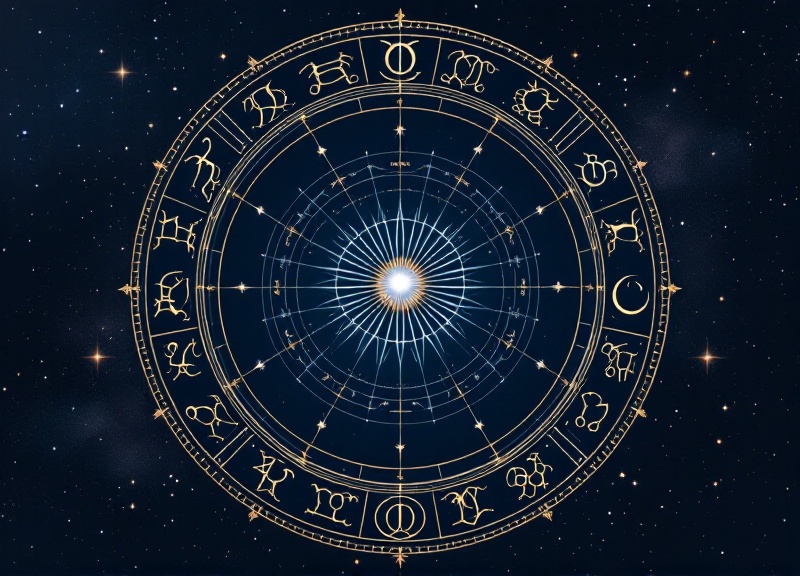
What This Means for Every Zodiac Sign
A necessary caveat: per-sign forecasts without reference to your full natal chart offer orientation, not prescription. Those feeling these transits most personally have significant natal planets or angles in early cardinal signs (Aries, Cancer, Libra, Capricorn) for Saturn-Neptune, and in early Gemini, Sagittarius, Virgo, or Pisces for Uranus.
From a Vedic standpoint, Sade Sati is active for Moon-sign Pisces (peak phase), Aries (entering second phase), and Taurus (concluding phase). If you know your Moon sign, this is more precisely informative.
For most, these transits register through cultural environment shifts rather than dramatic personal events: the mood shifts, options change, unspoken rules of ambition and identity are quietly rewritten.
Those running Shani Mahadasha or Antardasha in the Vedic dasha system will experience Saturn's transit effects most intensely — both tests and rewards.
How to Work With These Transits Practically
For Saturn in Aries: Build an Accountability Ritual
Establish a brief daily practice: name one courageous act you took and one reactive impulse you caught before it caused harm. Saturn's discipline meets Aries' instinctive nature — not suppression, but conscious direction. Saturn in Aries rewards those who take deliberate first steps, not those who wait for certainty.
For Neptune in Aries: Ask the Hard Question
Work with this journal prompt regularly: What cause or identity story am I currently dissolved into, and what of myself am I losing there? Neptune's core psychological medicine is the distinction between genuine vocation and ego inflation. Meditation practices that cultivate witness consciousness — observing without identifying — support this process.
For Uranus in Gemini: Practice Information Fasting
The Uranian urge pulls towards constant stimulation and novelty. The integration practice is regular withdrawal into slowness — analog thought, extended conversation, reading that lets meaning settle. The goal isn't rejecting technological change but remaining the author of your own cognitive world.
From the Vedic Toolkit
Chant the Shani Gayatri on Saturdays during the pre-dawn hour (Brahma Muhurta) to align personal karma with Saturn's instructive frequency. Offer sesame seeds and black cloth to those genuinely in need as a classical upaya (remedy) — not to placate the planet but to embody virtues it cultivates: service, humility, and perseverance without recognition.
Before making irreversible changes — new businesses, marriages, relocations — consult your natal chart for supportive dasha periods and auspicious timing.
A Threshold Ritual
At the February 2026 conjunction, and again at the June solstice: write down the single belief about yourself that you inherited rather than chose — that shapes your sense of what's possible but comes from someone else's story. Then write the version you'd author if truly beginning at zero. Release the first. Keep the second visible until 2027.
Frequently Asked Questions
Is 2026 really as significant as astrologers are claiming?
The astronomical facts are genuinely unusual — three outer planets shifting signs in a compressed window with a conjunction at the World Axis. Historical correlations with similar configurations are real and documented. Predicting exactly how these energies manifest is speculative. Here's the honest take: yes, this is a major astrological marker by any tradition's standards. But outer-planet shifts are doorways opening over years. Full cultural reverberations will likely be clearest in retrospect around 2029–2031.
Why do some astrologers say Saturn is in Pisces in 2026, not Aries?
Because Vedic astrology uses the sidereal zodiac, accounting for equinox precession and placing planets roughly 23–24 degrees behind their tropical positions. Neither system is wrong — they're different frameworks. If you follow Vedic astrology, Saturn completes its Pisces journey. In Western astrology, Saturn begins its Aries journey. Both readings offer useful insights.
Which zodiac signs will feel this the most?
In Western astrology: those with natal planets or angles in early Aries, Cancer, Libra, or Capricorn (from Saturn-Neptune) and early Gemini, Virgo, Sagittarius, or Pisces (from Uranus). In Vedic astrology: Pisces, Aries, and Taurus Moon signs in active Sade Sati phases. Check your full birth chart for the most accurate picture.
How does this affect relationships and compatibility?
Saturn-Neptune in Aries brings collective scrutiny to asserting individuality within partnerships. The desire to be fully, authentically oneself (Aries) will rub against the Neptunian longing for merger and dissolution of separateness. Relationships formed or restructured during this period carry this tension as an imprint. For compatibility insights specific to your chart, factor in where early Aries and Gemini fall in your natal houses.
Should I avoid making big life changes in 2026?
The Western perspective says act — Saturn in Aries rewards courageous, grounded beginnings. Vedic perspective counsels caution: don't initiate irreversible changes without confirming supportive dasha periods and auspicious timing in your chart. The synthesis? Move forward, but move consciously. The worst approach is paralysis. The second worst is impulsive leaping without a plan.
Frequently Asked Questions
What makes 2026 so unusual astrologically compared to other years?
Three outer planets change signs almost simultaneously, which is genuinely rare by any astronomical measure. Saturn and Neptune meet at 0 degrees Aries while Uranus moves into Gemini, a combination that tends to reset cultural, social, and structural conditions not for months but for years. Nothing quite like this has occurred in living memory.
What is the Saturn-Neptune conjunction and why does it matter?
The Saturn-Neptune conjunction is a roughly 36-year cycle that resets where these two very different planetary principles meet. Saturn tends toward structure and limits, Neptune toward dissolution and vision. When they meet at 0 degrees Aries -- the World Axis -- the chart suggests the tension between reality and idealism becomes a defining theme for the era that follows.
When did Uranus last move through Gemini, and what happened then?
Uranus was last in Gemini in the early 1940s, a period marked by rapid shifts in communication, technology, and information flow. History does not repeat precisely, but patterns often rhyme. The chart suggests a renewed focus on how ideas travel, how language is shaped, and how technology reshapes the way people understand and share knowledge.
Does this affect all zodiac signs equally?
No, the intensity tends to vary depending on your natal chart. Signs in the early degrees of Aries, Cancer, Libra, and Capricorn often feel Saturn-Neptune transits more directly, while Gemini and other mutable signs may feel Uranus more acutely. The full picture requires looking at where these degrees fall in an individual chart.
How should someone practically prepare for these transits?
Slowing down to reassess long-held assumptions often serves people well during outer planet shifts. These transits tend to reward honest self-examination over rigid planning. Building flexibility into commitments, staying curious about changing circumstances, and revisiting beliefs that may no longer hold up are practical starting points the article recommends for working with this unusual period.
Ready to explore your cosmic blueprint?
Discover what the stars reveal about your unique path.
Check Your Transit Chart

