Barbault's Basket 2026: Planetary Alignment & Renaissance
By Deluxe Astrology
Barbault's Basketplanetary alignmentJupiter cazimiNeptune retrogrademundane astrology

موقعیت هر سیاره در زمان تولد شما
میزان سازگاری شما - نمرهگذاری 36 نقطهای
تجزیه نمودار تقسیمی
محاسبهگر منزل قمری
پروفایل احساسی ودیک
جدولزمانی دورههای سیارهای
سیستم اخترشناسی درمانی
روش کریشناموrti پدهتی
چیزی که علامت زودیاک شما نمیپذیرد
فنگ شویی شخصیسازی شده
بهترین شهرها برای شما
دیدگاه یکپارچه چهار سیستم
دنبالههای متناسب با زودیاک
۶ نماد سیارهچه
نوع، اختیار و دروازهها
۱۰۰+ سنگ منطبق با زودیاک
روزهای قدرت شخصی
By Deluxe Astrology
André Barbault was a French mundane astrologer who spent decades doing something deceptively simple: he added up the angular distances between the five slowest-moving planets (Jupiter, Saturn, Uranus, Neptune, and Pluto) and graphed them against history. When those distances contracted — when the slow gods bunched together on one side of the zodiac — his cyclical index dropped, and the world tended to crack open. Both World Wars, the 1929 crash, the AIDS crisis, and most famously, his 2011 prediction of a severe global crisis around 2020 — all corresponded to low-index periods.
The "basket" refers to a specific shape: most of the outer planets cluster into one arc of the zodiac while one sits opposite, forming a handle. Think of it as the solar system concentrating its heaviest energies into a single hemisphere, then handing you the carrying mechanism. The pattern correlates with flashpoints of civilizational restructuring — moments when pressure and possibility become indistinguishable.
Here's the part the Instagram carousels tend to skip: Barbault associated these compressed formations with concentrated transformative pressure, not guaranteed progress. The 1917 configuration that coincided with the Russian Revolution fits his framework perfectly. That event reshaped civilization, but calling it a Renaissance requires considerable political generosity.
On July 18, 2026, the basket reaches its fullest expression. Four planets converge around the 4-degree mark of their respective signs, creating an architecture of fire and air that is genuinely rare.
| Planet | Position (Western) | Vedic Nakshatra | Element | Archetypal Theme |
|---|---|---|---|---|
| Jupiter (cazimi) | 4° Leo | Magha | Fire | Creative sovereignty, royal authority |
| Neptune (Rx) | 4° Aries | Ashwini | Fire | Spiritual heroism, mythic dissolution |
| Pluto | 4° Aquarius | Dhanishta | Air | Collective shadow transformation |
| Uranus | 1° Gemini | Mrigashira | Air | Communication revolution, cognitive rewiring |
| Lunar Nodes | Shift to Aquarius-Leo axis (July 26) | — | — | Karmic recalibration of individual vs. collective |
One honest note worth flagging: Uranus at 1° Gemini isn't making tight major aspects to the other three planets. Some advanced practitioners have noted that this loosens the "grand cross-current of fire and air" narrative circulating in popular accounts. The basket may have a somewhat wobbly handle.
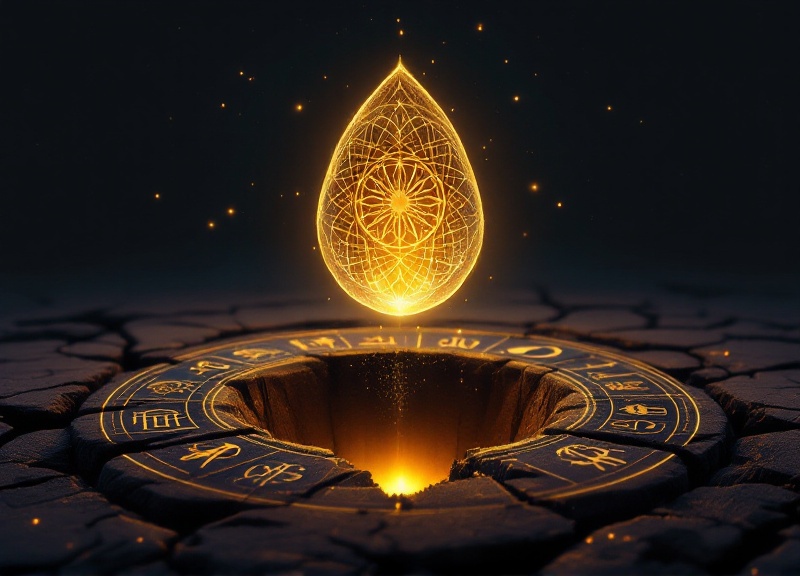
Across every tradition that weighed in on this alignment, one theme emerged unanimously: early degrees carry extraordinary seed power.
From a Vedic lens, the concept is bala — raw, uninitiated strength at the beginning of a sign. The classical texts describe early-degree ingresses as moments of nava-pravesh (fresh entry), carrying the full potency of seed-state energy. Seeds carry maximum karma. They either germinate or they don't, but the moment of planting is never neutral.
Western psychological astrology reads these early degrees through a Jungian archetypal lens: four transpersonal planets simultaneously standing in seed positions represents what depth psychology would call a constellation of the Self archetype at the collective level — a synchronicity so layered it demands attention.
Even Chinese cosmological astrology, working through the Five Phases, reads the fire-and-air dominance of this configuration as an explosive phase of Yang expansion following years of Yin consolidation. The period from 2020 through 2025 has carried a heavy contractive signature. The basket signals the reversal: creation externalized, the world remembering how to build rather than merely endure.
Key takeaway: Whether you call it bala, ingress energy, or the initiation of a new heavenly stem cycle, every major astrological tradition recognizes that what gets planted in moments of unusual plasticity shapes generations.
Here's where the experts genuinely diverge, and the disagreement is worth sitting with.
The popular narrative — fueled by astrology social media and enthusiastic YouTube breakdowns — frames this alignment as the seed of an unambiguous Golden Age flowering through 2029. And there is real support for optimism: the simultaneous entry of Pluto, Neptune, and Uranus into new signs represents a rare recalibration of long-cycle themes, and the Jupiter cazimi broadcasts whatever is nascent with unusual confidence.
But the culturally and historically informed view pushes back. Neptune's last entry into Aries, in 1861, coincided with the beginning of the American Civil War — a period of violent ideological rupture that eventually produced social transformation, but only after enormous upheaval. The Jungian perspective adds that the shadow of any "renaissance" narrative is inflation: when transpersonal energies flow strongly, the ego is tempted to identify with them rather than serve them. The European Renaissance that produced Da Vinci also produced the Inquisition at full force.
The realistic trajectory, then, is probably neither Golden Age nor catastrophe, but accelerated bifurcation. Institutions unable to adapt will face intensifying pressure. New frameworks in technology, spiritual practice, art, and governance will achieve surprising visibility by 2028-2029. Both will happen simultaneously.
The Jupiter cazimi — Jupiter absorbed into the heart of the Sun — is the alignment's most dramatic single signature, and the Vedic and Western traditions read it with fascinating differences.
Western astrology treats cazimi as a moment of empowerment: the planet becomes solar, purified, operating at peak expression. Jupiter cazimi in Leo is the royal solar hero at the moment of investiture — creative sovereignty burning at its brightest.
Classical Jyotish traditionally considers close solar proximity as combustion (asta), a weakening. But there's a nuance the Vedic scholar brings that most Western practitioners miss: within one degree, the planet enters what some classical texts call ishta — divine absorption rather than destruction. Jupiter doesn't burn; it becomes the light itself.
What makes this cazimi extraordinary is its nakshatra context. Jupiter in early Leo occupies Magha nakshatra, whose presiding deities are the Pitru — the ancestral spirits. Magha's power is tyaga, the act of releasing what has been inherited. A Jupiter cazimi in Magha doesn't just begin a new cycle. It signals the formal transmission of accumulated wisdom from one era to the next, as if the ancestors themselves are passing authority to whatever is being born.
Your birth chart can reveal exactly which house this cazimi activates for you — and that house becomes the arena where your own creative sovereignty is being called forward.
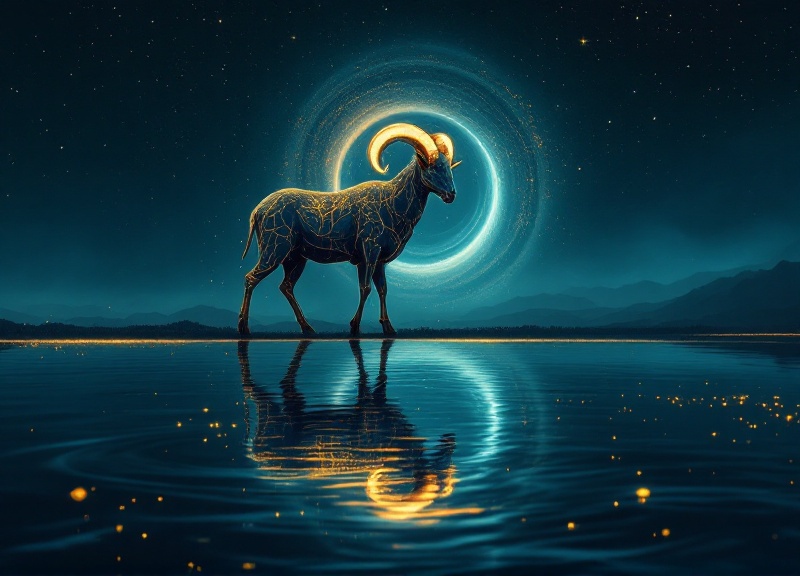
Most analysis of the Barbault Basket rushes toward the Jupiter cazimi coronation. But Neptune retrograde in Aries, stationing on July 7 — eleven days before the peak alignment — may be the more important story.
Aries governs the mythology of the self-originating hero. Neptune dissolves whatever is false within that mythology. A hero who has not examined their wound before the quest begins does not complete the quest. They reenact it.
The Vedic reading deepens this. In Jyotish terms, early Aries corresponds to Ashwini nakshatra, whose deities are the Ashwini Kumaras — the divine physicians. Ashwini carries the power of rapid healing through swift, corrective intervention. The spiritual awakening trending through 2026-2029 carries this Ashwini quality: not gradual illumination, but sudden restoration of vitality.
Here's the synthesis that no single tradition catches alone: Jupiter cazimi in Leo is a coronation. Neptune retrograde in Aries is a harrowing. These two energies aren't contradictory — they're sequential in the hero's journey. You cannot be crowned before you've been tested in the underworld of your own motivations. The Renaissance being seeded here won't be led by those who perform readiness. It will be led by those who've genuinely sat with the Neptune retrograde question: What am I willing to dissolve about my identity so that something truer can create through me?
The window between July 7 and July 26, 2026 carries what Vedic texts call bija-karma — seed karma — that ripens with unusual speed through 2028-2029. Here's how to work with it across traditions:
Working with crystals associated with Jupiter (yellow sapphire, citrine) and Neptune (amethyst, labradorite) can support your practice during this period.
Key takeaway: The cosmic architecture always leaves room for the one who chooses to lift it. The basket has a handle. The handle is the human hand.
It depends on what you mean by Renaissance. The alignment is genuinely rare and historically significant within Barbault's framework. But "Renaissance" is a retrospective label — the people living through the Italian Renaissance didn't call it that. What this alignment seeds is more accurately described as a period of accelerated cultural and spiritual recalibration that will likely be recognizable as transformative by 2029-2030. Whether it feels golden depends enormously on whether you've done the interior work the alignment demands.
If you have planets, angles, or nodes near 4° of any cardinal or fixed sign (Aries, Cancer, Libra, Capricorn, Leo, Scorpio, Aquarius, Taurus) — and especially in Leo, Aries, Aquarius, or Gemini — you'll feel this configuration acutely. Run your birth chart to check. Those born in the 1970s through early 1990s may also be entering major Vimshottari dasha transitions that amplify this energy significantly.
Classical Jyotish works with the Navagraha — nine planets excluding Uranus, Neptune, and Pluto. But many modern Vedic practitioners acknowledge the outer planets as supplementary influences. The Vedic framework reads this alignment through the lens of simultaneous early-degree ingresses, nakshatra activations (particularly Magha and Ashwini), and nodal shifts — arriving at strikingly similar conclusions about seed-force and collective karmic ripening through different methodology entirely.
Neptune retrograde asks that spiritual inspiration be internally tested before externally projected. In Aries specifically, it challenges the mythology of the self-originating hero. Your practice during this period should prioritize honest self-inquiry over outward declaration. Early morning meditation, contemplative study, and the Vedic recommendation of pranayama aligned with Ashwini nakshatra days all support this inward turn.
With grounded optimism. The directional themes — outer planets in new signs coinciding with major cultural transitions — have stronger historical support than any single event prediction. The 2029 framing is a reasonable estimate for when the seeds planted in 2026 become culturally visible, but collective processes resist precise timing. Treat it as a horizon, not a deadline.
Barbault's Basket refers to a configuration where the five outer planets cluster tightly on one side of the zodiac, compressing Andre Barbault's cyclical index. In 2026, those planets gather in an unusually narrow arc, which historically tends to coincide with periods of civilizational stress and seed-planting -- moments when old structures crack and new directions begin forming.
Honestly, the chart suggests both pressures exist at once. Tight planetary clusters in Barbault's model have accompanied both destructive ruptures and genuine renewal -- often the same event viewed from different angles. The 2026 alignment carries renaissance potential alongside real tension, and which quality emerges tends to depend heavily on how collective and individual energies are directed during the window.
Jupiter cazimi places the planet of expansion at the heart of the Sun in Leo, which often intensifies themes of leadership, visibility, and bold creative expression. The chart suggests this can function like a coronation -- a bright amplification of purpose -- but proximity to the Sun also carries combustion risk, meaning overreach or ego inflation could undercut the very opportunities the aspect opens.
Neptune retrograde in Aries tends to redirect outward heroic impulses inward, asking that idealism be tested before it is acted upon. Rather than charging forward on a vision, this placement often calls for honest self-examination first. The chart suggests that during this window, inspirations that survive internal scrutiny are more likely to carry lasting weight than ones launched purely on enthusiasm.
The article points toward conscious intention-setting, honest reflection on long-held ambitions, and measured rather than impulsive action. Slow outer-planet alignments tend to reward preparation over reaction. Journaling, revisiting projects that feel genuinely meaningful, and staying alert to sudden openings without overcommitting are all approaches that align reasonably well with the mixed -- pressured yet potentially generative -- quality this configuration suggests.
Ready to explore your cosmic blueprint?
Discover what the stars reveal about your unique path.
Check Your Transit ChartGet your weekly cosmic forecast
Join 10,000+ cosmic explorers


