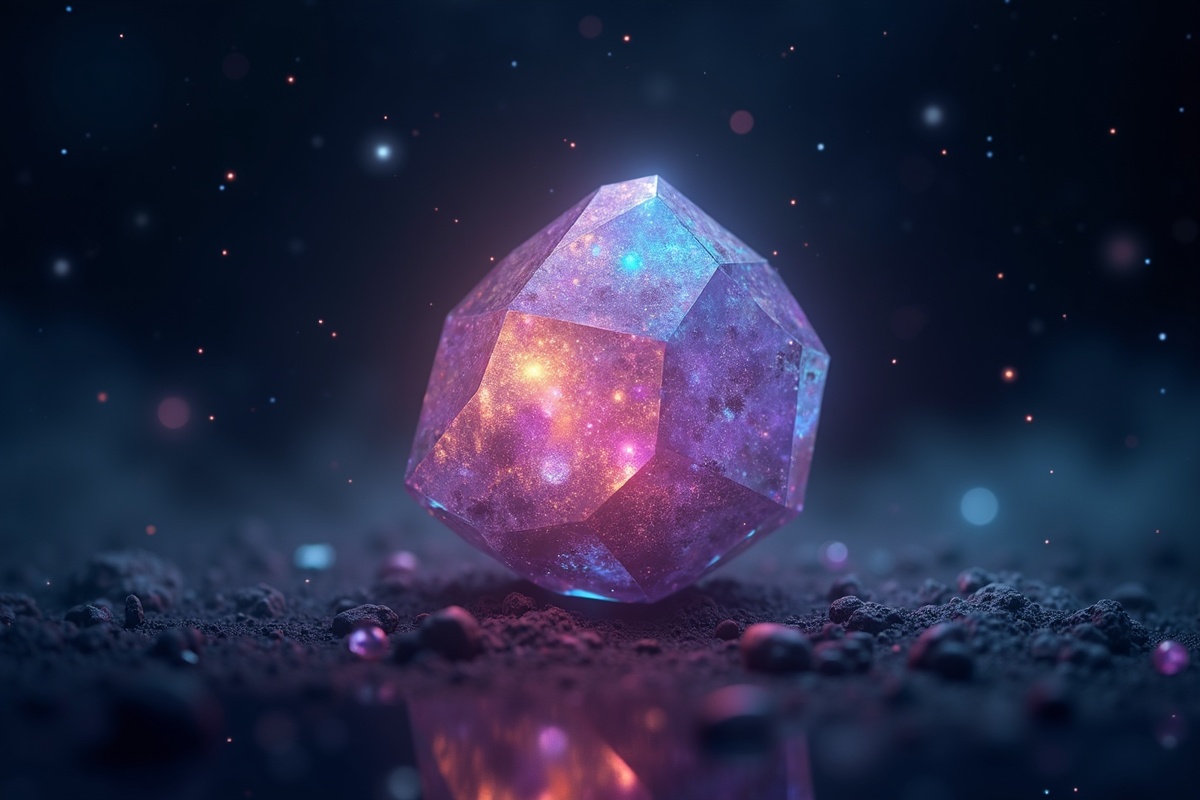
Bismuth
Mohs
2
System
Trigonal
Chakra
Crown
Zodiac
Aquarius
Chakras
CrownRoot
Ruling Planets
Uranus, Saturn
Intentions
What is Bismuth?
Bismuth is a chemical element that forms striking iridescent, geometric crystals when melted and slowly cooled. The rainbow oxidation layer and distinctive hopper crystal formation — resembling tiny staircases — make it one of the most visually stunning specimens in any collection.
While natural bismuth crystals are extremely rare, lab-grown specimens are widely available and carry the same metaphysical properties. Bismuth promotes cohesiveness in relationships and group work.
Geological Profile
| Mohs Hardness | 2 |
| Crystal System | Trigonal |
| Chemical Formula | Bi |
| Origin Countries | Germany, Australia, China, Bolivia |
Healing Properties
Physical
Supports fever reduction and digestive health.
Emotional
Reduces feelings of isolation, promotes adaptability.
Spiritual
Bridges physical and spiritual dimensions, facilitates astral travel.
History & Mythology
Bismuth holds a unique position in the gemstone world as both an ancient element and a modern crystalline marvel. While pure bismuth metal has been known since medieval times, often confused with tin or lead by early alchemists, the stunning rainbow-colored crystals we recognize today are primarily laboratory-grown formations that emerged in the 20th century. Ancient civilizations occasionally encountered natural bismuth in its metallic form, particularly in Germany's Harz Mountains, where medieval miners called it 'wissmuth' or 'white mass.' The element's name derives from the German 'wismut,' later latinized to 'bisemutum.'
The spectacular geometric staircase formations and iridescent rainbow surfaces that make bismuth so sought-after are achieved through controlled cooling processes that allow the metal to crystallize in its natural trigonal system. This process creates the distinctive hopper crystal structure with oxidized surfaces that display brilliant blues, purples, golds, and greens. While these laboratory specimens differ from the rare natural bismuth crystals found in places like Bolivia and Australia, they maintain the same chemical composition and crystalline properties, making them valued both for their beauty and their metaphysical applications in transformation and clarity work.
Care & Maintenance
Bismuth requires gentle handling due to its relatively low hardness of 2 on the Mohs scale, making it softer than fingernails and easily scratched by most other materials. Clean your bismuth crystals using only warm water and mild soap, avoiding any abrasive materials or harsh chemicals that could damage the delicate iridescent surface coating. Store bismuth separately from harder stones, preferably wrapped in soft cloth or placed in individual compartments to prevent scratching. Avoid exposing bismuth to extreme temperature changes, as this can cause stress fractures in the crystal structure. The rainbow oxidation layer that creates bismuth's signature colors is particularly fragile, so handle with care and avoid touching the crystal faces directly when possible. Keep bismuth away from acidic substances and jewelry cleaners, which can strip away the beautiful iridescent coating. For energetic cleansing, use gentle methods like moonlight exposure or sage smoke rather than water immersion or salt treatments.
Who Should Wear Bismuth?
Bismuth resonates particularly well with Aquarius, Capricorn, and Virgo individuals, supporting their natural inclinations toward innovation, structure, and analytical thinking. Those undergoing major life transitions or career changes often find bismuth's transformational energy especially beneficial, as it helps facilitate smooth transitions while maintaining grounding and clarity. Creative professionals, scientists, and technology workers are drawn to bismuth's unique blend of futuristic aesthetics and practical earth energy. People seeking to balance their spiritual pursuits with material world responsibilities may find bismuth's crown and root chakra connection particularly helpful. The crystal's affinity for both Uranus and Saturn makes it ideal for individuals learning to harness revolutionary ideas within practical frameworks. Those who feel scattered or overwhelmed by rapid change often benefit from bismuth's stabilizing influence, while its connection to the air element supports clear communication and mental clarity during periods of transformation.
Fun Facts
1
Bismuth is one of the most diamagnetic elements on Earth, meaning it's strongly repelled by magnetic fields and can actually levitate above powerful magnets.
2
The rainbow colors in bismuth crystals are created by a thin oxide layer that's only nanometers thick, similar to the effect that creates colors in soap bubbles.
3
Natural bismuth crystals are extremely rare, with most specimens coming from laboratory growth processes that can create crystals weighing several pounds.
4
Bismuth has the longest half-life of any naturally occurring element that's actually radioactive, with a decay time longer than the age of the universe.
5
The distinctive staircase or 'hopper' crystal formation occurs because bismuth crystals grow faster on their edges than in their centers.
6
Bismuth is used in some cosmetics and medications, making it one of the least toxic heavy metals and safe for handling.
Pairs Well With
Avoid combining with:
fire agatecarnelian
Related Gemstones
Fluorite
Third Eye Chakra
PiscesCapricornAquarius
clarityintuitionhealing
The genius stone, renowned for absorbing negativity and boosting mental clarity.
Labradorite
Third Eye Chakra
ScorpioLeoSagittarius
intuitiontransformationprotection
The stone of magic and mysticism, with mesmerizing iridescent play of colors.
Opal
Crown Chakra
LibraScorpioCancer
creativityloveintuition
The stone of cosmic fire, displaying a kaleidoscopic play of color within.