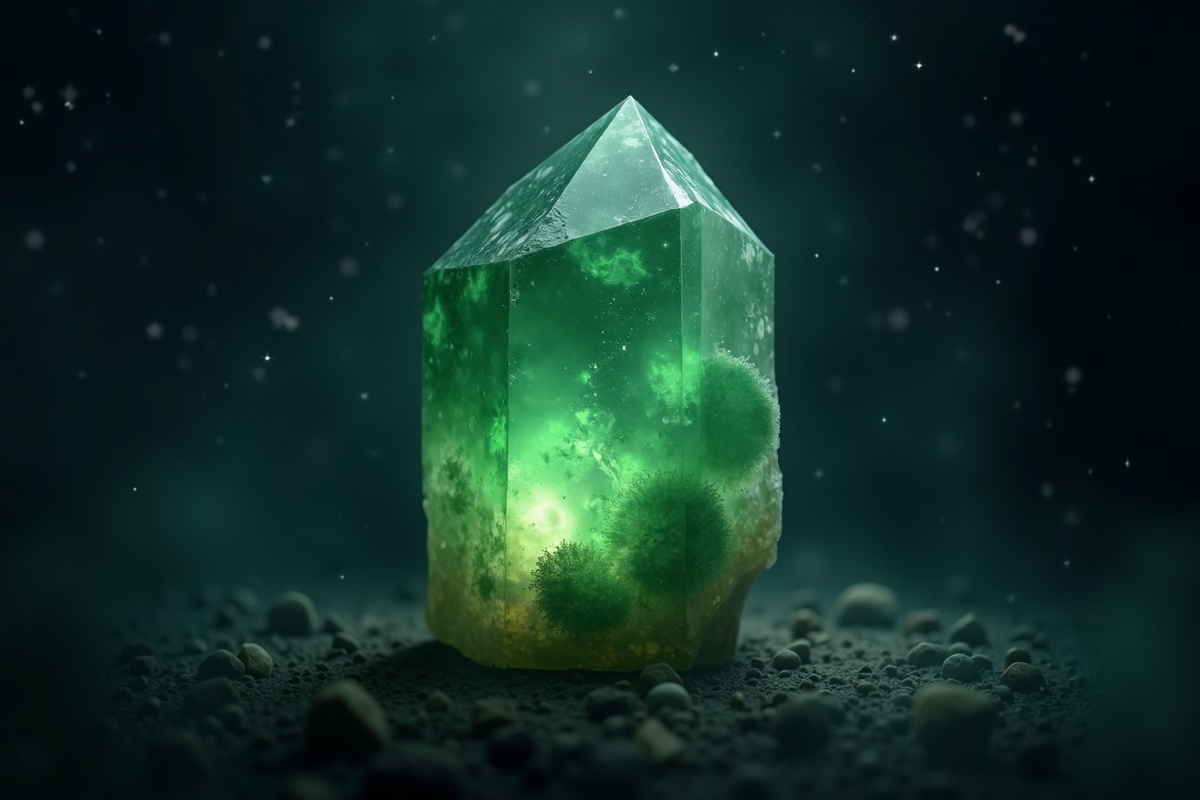
Moss Agate
Mohs
7
System
Trigonal
Chakra
Heart
Zodiac
Virgo
Chakras
Heart
Ruling Planets
Mercury, Moon
Intentions
What is Moss Agate?
Moss Agate features dendritic inclusions that resemble moss or trees, connecting the wearer to nature's abundance. It is a stone of new beginnings and agricultural abundance.
Geological Profile
| Mohs Hardness | 7 |
| Crystal System | Trigonal |
| Chemical Formula | SiO₂ |
| Origin Countries | India, Brazil, USA, Uruguay |
Healing Properties
Physical
Supports immune system, reduces inflammation.
Emotional
Reduces sensitivity to weather and pollution.
Spiritual
Connects to nature spirits, enhances gardening.
History & Mythology
Moss Agate has captivated humanity for millennia, earning reverence across diverse cultures as a powerful talisman of nature's abundance. Ancient civilizations discovered this mesmerizing stone's dendritic patterns—formed by mineral inclusions that create landscapes within the crystal—and interpreted them as messages from the earth itself. The Romans and Greeks particularly prized moss agate as a stone of warriors and farmers alike, believing it ensured victorious battles and bountiful harvests. Arabian cultures embedded moss agate in ceremonial vessels, convinced it could purify water and bring rainfall during droughts.
The name 'agate' derives from the Achates River in ancient Sicily, where these stones were first systematically collected. Medieval European herbalists and alchemists treasured moss agate as the ultimate gardener's companion, placing specimens in crop fields to encourage growth and ward off plant diseases. Native American tribes, particularly in the southwestern United States where beautiful specimens are found, incorporated moss agate into rain ceremonies and earth-blessing rituals. The stone's reputation as a bridge between the mineral and plant kingdoms has endured through centuries, with modern crystal enthusiasts continuing to honor its ancient legacy as nature's most faithful ally.
Care & Maintenance
Moss Agate's impressive hardness of 7 on the Mohs scale makes it relatively durable for everyday wear and handling. Clean your moss agate using warm soapy water and a soft brush, gently scrubbing to remove any accumulated oils or dirt from its natural crevices where moss-like inclusions reside. Ultrasonic cleaners are generally safe for moss agate, though avoid this method if your piece shows visible fractures or has been treated. While moss agate can handle brief sunlight exposure, prolonged UV exposure may cause subtle color fading in some specimens. Store moss agate separately from softer stones to prevent scratching, and avoid exposure to harsh chemicals, bleach, or extreme temperature changes. When not wearing your moss agate jewelry, wrap pieces individually in soft cloth to preserve their natural luster and intricate internal patterns.
Who Should Wear Moss Agate?
Moss Agate particularly resonates with earth signs Virgo, along with versatile Gemini and innovative Aquarius, though anyone seeking deeper connection with nature's rhythms can benefit from its grounding presence. Gardeners, farmers, botanists, and environmental professionals find moss agate especially supportive of their earth-centered work. Those experiencing periods of growth—whether starting new ventures, recovering from illness, or cultivating patience—often gravitate toward moss agate's nurturing energy. Creative individuals seeking to ground their inspiration in practical application appreciate how moss agate balances innovation with steady progress. People dealing with stress, anxiety, or feeling disconnected from natural cycles may find moss agate's stabilizing influence particularly helpful. The stone also appeals to those working on abundance mindset, financial growth, or anyone needing encouragement to persevere through slow but steady progress toward their goals.
Fun Facts
1
Despite its name, moss agate contains no actual moss—the green 'moss' patterns are created by mineral inclusions of manganese and iron oxides that formed millions of years ago.
2
Montana moss agate is the official state gemstone of Montana and is prized for its scenic landscape patterns that can resemble miniature forests or mountain scenes.
3
Ancient Romans believed moss agate could make warriors invisible during battle and ensure victory in gladiatorial contests.
4
The largest moss agate ever found weighed over 7,000 pounds and was discovered in Montana in 2009, now displayed at a local museum.
5
Moss agate is technically not a true agate since it lacks the characteristic banded structure, but belongs to the chalcedony family of quartz.
6
Some moss agate specimens display plume patterns that are so intricate they're used as natural art pieces, requiring no cutting or polishing to showcase their beauty.
Pairs Well With
Avoid combining with:
obsidianhematite
Related Gemstones
Aventurine
Heart Chakra
AriesVirgoTaurus
abundancelovehealing
The Stone of Opportunity — considered the luckiest crystal for attracting prosperity.
Jade
Heart Chakra
TaurusLibraPisces
abundancehealinglove
A stone of purity, serenity, and prosperity revered for thousands of years.
Tree Agate
Heart Chakra
VirgoTaurusGemini
peaceabundancegrounding
A white stone with green inclusions that strengthens connection to nature and inner peace.