Jupiter in Leo vs Pluto in Aquarius: July 2026 Power Shift
By Deluxe Astrology
Jupiter in LeoPluto in AquariusNorth Node AquariusJuly 2026 AstrologyPower Structures

നിങ്ങളുടെ ജനനസമയത്ത് ഓരോ ഗ്രഹവും എവിടെയായിരുന്നുവെന്ന് കാണുക
നിങ്ങൾ എത്രത്തോളം യോജിച്ചവരാണ്? 36-പോയിന്റ് സ്കോറിങ്
വിഭജിത ചാര്ട്ട് വിശകലനം
ചന്ദ്ര നിവാസ കാൽക്കുലേറ്റർ
വേദിക വൈകാരിക പ്രൊഫൈൽ
ഗ്രഹ കാലഘട്ടങ്ങൾ സമയരേഖ
പരിഹാര ജ്യോതിഷ വ്യവസ്ഥ
കൃഷ്ണമൂർത്തി പദ്ധതി
നിങ്ങളുടെ രാശി സമ്മതിക്കാത്തത്
വ്യക്തിപരമായ വാസ്തു
നിങ്ങൾക്കായി മികച്ച നഗരങ്ങൾ
4 സിസ്റ്റം ഏകീകൃത കാഴ്ച
രാശി വരിക്കാൻ യോജിച്ച ശ്രേണികൾ
6 ഛിന്നഗ്രഹ ആർചെടൈപ്പുകൾ
ടൈപ്പ്, അധികാരം ആൻഡ് ഗേറ്റുകൾ
100+ രാശി പൊരുത്തപ്പെട്ട കല്ലുകൾ
വ്യക്തിഗത ശക്തി ദിവസങ്ങൾ
By Deluxe Astrology
The phrase "frequency wars" has been building momentum in astrology circles, popularized in large part by astrologer Molly McCord. It describes the collision anticipated around mid-July 2026, when old fear-based power structures supposedly meet an emergent, heart-centered wave of collective consciousness. It's evocative language — borrowed partly from physics, partly from wellness culture — and it has captured the imagination of a wide audience (and honestly, this one catches people off guard).
But what does it actually describe? Strip away the more grandiose metaphysics, and you find something every tradition of astrology recognizes: a rare moment when the sky arranges itself into a pattern so precise that practitioners from wildly different lineages arrive at the same core reading. The throne and the crowd are about to have a very public argument about who really holds power — and more importantly, what power even means anymore.
The Vedic tradition has its own name for this dynamic: Dharma-Yuddha, the war for right action that each great planetary cycle forces humanity to confront. Western psychological astrology frames it as the solar hero archetype clashing with the collective shadow. Both are pointing at the same thing from different angles — and that's worth paying attention to.
Here's the astronomical backbone. On approximately July 19, 2026, Jupiter at 4° Leo forms an exact opposition to Pluto retrograde at 4° Aquarius. That alone would be a headline transit. But what makes this window genuinely extraordinary is that Uranus sits at 4° Gemini and Neptune at 4° Aries during the same period — four outer planets, all at the same degree, forming a rare harmonic configuration. Sound familiar?
André Barbault's research tradition called this kind of pattern a "Basket" configuration, associating it with civilizational inflection points. Whether you follow Barbault or not, the geometric precision is unusual enough that it earns its reputation as a significant moment in July 2026 astrology.
| Planet | Sign | Degree | Vedic Nakshatra | Core Theme |
|---|---|---|---|---|
| Jupiter | Leo (Simha) | 4° | Magha | Expanded sovereignty, dharmic leadership |
| Pluto (Rx) | Aquarius (Kumbha) | 4° | Shravana–Dhanistha boundary | Collective transformation, systemic power |
| Uranus | Gemini | 4° | — | Disrupted mental frameworks, information revolution |
| Neptune | Aries | 4° | — | Dissolved ego boundaries, spiritual impulse |
| North Node (Rahu) | Aquarius (Kumbha) | Varies | Shravana | Collective evolutionary direction |
| South Node (Ketu) | Leo (Simha) | Varies | Magha | Release of ego-driven authority |
Key takeaway: This isn't a single transit — it's a chord. Multiple planetary voices, one degree, one moment of concentrated pressure on the question of power.
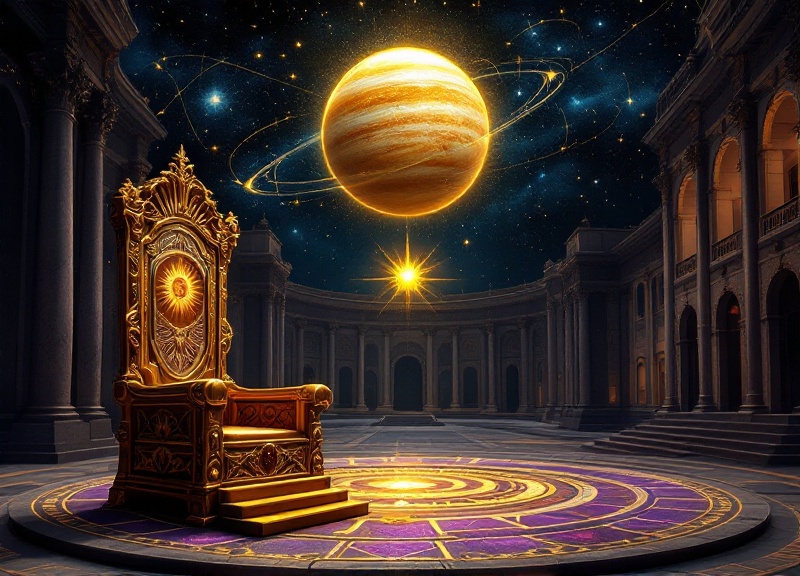
Jupiter in Leo is the planet of wisdom and expansion entering the sign of kings. In Vedic terms, Guru (Jupiter) transiting Simha (Leo) amplifies raj-shakti — the power of visible, sovereign authority. Jupiter's initial passage through Magha Nakshatra, one of the most royally charged lunar mansions, deepens this further. Magha is ruled by the Pitrs (ancestral spirits) and carries the power to release inherited patterns of authority. When the planet of dharma walks through the mansion of inherited power, the collective is asked a pointed question: which thrones are occupied by genuine qualification, and which are just inherited entitlement in a good outfit?
Across the zodiac, Pluto in Aquarius grinds away at the foundations beneath those thrones. The last time Pluto occupied Aquarius was 1778–1798 — the era of the American and French Revolutions, when ancien régime hierarchies were dismantled and the first mass experiments with democratic governance took shape. That historical correlation is among the stronger patterns in mundane astrology's track record. Pluto doesn't renovate; it excavates to bedrock.
The opposition between them — the Leo-Aquarius axis — is the eternal tension between the singular sovereign and the collective body. From a Jungian perspective, this is the solar hero archetype meeting the collective unconscious in open confrontation. From the Vedic lens, it's raja (kingship) versus prajatantra (the people's governance). The Sanskrit text Saravali describes Jupiter in opposition to malefic influences as producing "conflict between the learned and the mighty, wherein dharma itself becomes the battlefield." Oh, and there's more — the collective tension during this period might echo beyond just planets and into political discourse between nations.
The North Node in Aquarius during this period intensifies the evolutionary pull toward collective accountability, while Ketu in Leo dissolves attachment to ego-constructed identity. Classical texts are blunt about this: Ketu in Simha brings "the fall of kings who govern through pride rather than dharma."
Here is where it gets genuinely interesting. Western and Vedic astrology are reading the same sky in different dialects — and arriving at remarkably similar sentences. The bottom line? The essence of the events remains a shared thread.
Where Western astrology sees Pluto transforming collective systems in Aquarius, Vedic astrology places Rahu (the North Node, the point of karmic hunger) in the same sign. Both systems agree: the collective is being pulled forward, hungrily, toward new frameworks of belonging. Meanwhile, Ketu in Leo mirrors the Western reading of the South Node — a karmic release from performance as identity, from rulership as divine right.
Where they diverge is revealing. The Vedic tradition frames this primarily as Guna-Yuddha — a war of qualities between tamas (inertia, fear-based control) and sattva (clarity, dharmic service). This is a battle that must be won within each practitioner's own practice, not merely observed in the headlines. The Western psychological tradition, especially the Liz Greene and Howard Sasportas lineage, frames the same dynamic as an individuation crisis — the ego encountering archetypal energies too large to contain, requiring conscious differentiation rather than identification.
And here's a productive tension worth holding: the Cultural Contextualist perspective rightly notes that calling this "the most important astrological event of the century" is an interpretive assertion, not a verifiable empirical claim. Barbault's framework was descriptive pattern recognition, not prophecy. The Gauquelin research shows planetary positions correlate with certain variables at rates exceeding chance — but that's a far cry from confirming metaphysical "frequency wars." What July 2026 will almost certainly deliver is a cultural pressure point around who leads, how they lead, and whether the performance of power and the substance of power are the same thing. That question is already in the water. This transit sets it on fire.
Here's what most analysts miss when they frame this as a clash between "old fear systems" and "rising awareness": Jupiter in Leo is morally neutral. Jupiter expands whatever it touches. In Leo, it will expand both the highest expression of heart-centered leadership — the sovereign who serves — and the lowest expression: the cult of personality, the ego performing consciousness rather than embodying it.
This insight, which the Intuitive Synthesizer nails with particular clarity, reframes the entire conversation. The frequency war's most uncomfortable battlefield isn't crumbling institutions versus awakened souls. It's the spiritual marketplace itself. Jupiter in Leo opposite Pluto in Aquarius will expose which leaders, teachers, and public figures — including, yes, astrology content creators — are genuinely heart-centered and which are performing heart-centeredness for algorithmic approval. And let's be honest, we've all heard the empty rhetoric masked as wisdom, right?
Pluto doesn't destroy power. It exposes its source. The question it asks every visible figure is identical: what is actually driving your signal?
The Jungian perspective offers clinical language for this: inflation, meaning the ego has identified with an archetypal content too large to contain. Signs include grandiosity, compulsive need for recognition, difficulty tolerating criticism, and contempt for ordinary life (something we've probably all felt at some point). These aren't moral failures — they're psychological alerts. Watch for them in yourself and in the figures you follow.
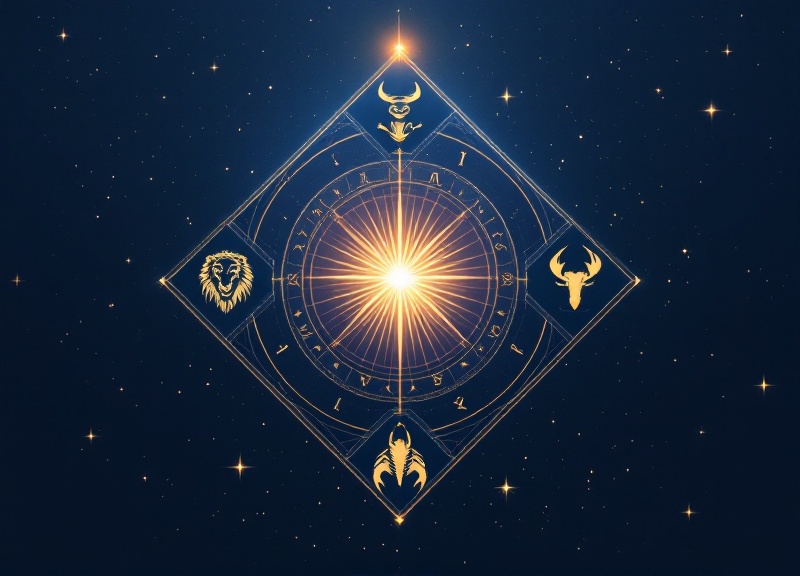
If your natal Moon sign (Janma Rashi), Ascendant (Lagna), or personal planets fall in the fixed signs — Leo, Aquarius, Taurus, or Scorpio — especially near 4°, this transit carries exceptional weight. You can check your placements using a free birth chart calculator.
From a Vedic standpoint, remedial measures are appropriate during this window. Propitiation of Brihaspati (Jupiter) through the Guru Beej Mantra — Om Gram Grim Graum Sah Guruve Namah — recited on Thursdays during the waxing moon strengthens access to Jupiter's dharmic guidance. Wearing yellow sapphire or yellow topaz on the index finger, after proper individual chart assessment, supports Guru's clarity. Explore supportive gemstone options through our crystals and healing stones guide.
Timing note: The fortnight between Jupiter's exact opposition to the Pluto-Rahu complex and the subsequent new moon (Amavasya) in late July 2026 carries maximum intensity. Begin new ventures requiring courage after this window passes.
Here are actionable practices drawn from multiple traditions:
Journal two questions weekly: "Where am I performing rather than expressing?" and "Where am I hiding in collective agreement rather than speaking my particular truth?" These track the Jupiter-Pluto opposition in your inner life — inevitably revealing hidden dimensions.
Heart-center practice (somatic, not conceptual): Spend ten minutes daily in conscious, physical awareness of your heart center. Not visualization — sensation. This grounds Jupiter in Leo in your body rather than your ego.
Power audit: Choose one system you participate in — workplace, platform, family — and write an honest account of how power moves within it, including your own role. This is Pluto in Aquarius work: accountability within the structures you inhabit.
Ritual for the exact opposition (around July 19): Light a gold or amber candle. Write one sentence naming what you genuinely want to be recognized for — not what looks good, but what is true. Sit with it face-down for ten minutes in silence. Then burn it. The frequency war resolves, individually, when the ego's dream of recognition is transformed by the question of collective purpose.
Vedic timing: Charitable service at temples, supporting scholars and teachers, and donating yellow foods on Thursdays all strengthen your relationship with Jupiter's higher function during this transit — a timeless gesture with modern subtleties.
It refers to the rare alignment around July 19, 2026, when Jupiter at 4° Leo opposes Pluto at 4° Aquarius, while Uranus (4° Gemini) and Neptune (4° Aries) also sit at the same degree. The phrase was popularized by astrologer Molly McCord to describe the collision between old power structures and emerging collective consciousness. Whether you take it as literal metaphysics or powerful symbolism, the underlying astrological configuration is real and astronomically precise.
The North Node in Aquarius (Rahu in Kumbha, in Vedic terms) amplifies the evolutionary pull toward collective transformation and systemic transparency — crucial if you think about it. It means the soul's growth direction during this period is toward authentic contribution to something larger than individual ego — which directly intensifies the pressure that Pluto in Aquarius is already placing on outdated hierarchies. Check your horoscope to see how this transit interacts with your sign.
Honest answer: both. The historical correlation between Pluto in Aquarius and structural upheaval (the American and French Revolutions happened during its last pass) is genuinely strong. Jupiter in Leo's track record of inflating celebrity and leadership dynamics is well-documented across multiple twelve-year cycles. But calling any single alignment "the most important event of the century" is interpretation, not fact. What you can expect with confidence is a concentrated cultural reckoning around the legitimacy of visible authority. That's plenty.
Not concerned — attentive. If your birth chart shows personal planets (Sun, Moon, Mercury, Venus, Mars) near 4° of Leo, Aquarius, Taurus, or Scorpio, you'll feel this opposition with particular intensity. Liz Greene describes this kind of encounter as meeting the daemon — an energy larger than the ego that can't be managed, only consciously participated in. The practical work listed above will be especially relevant for you.
Yes. The Leo-Aquarius opposition activates fundamental tension between the need for individual recognition and the demands of collective belonging. Relationships formed or tested during this window will face a core question: can you love someone as an individual while you are both part of something larger? This is especially potent in synastry for partners with fixed-sign placements. Our compatibility tool can help you identify where those pressure points might land in your relationship.
This opposition peaks around July 19, 2026, placing Jupiter in Leo directly across the zodiac from Pluto in Aquarius. The pattern tends to sharpen tensions between concentrated personal authority and the diffuse power of collective movements. Astrologers across different traditions often read this as a rare moment when questions about who leads, and for whose benefit, become unusually difficult to avoid.
The term describes the anticipated collision between older, fear-based power structures and an emerging, broadly collective orientation, popularized notably by astrologer Molly McCord. Strip away the more poetic framing and it points to something more familiar: a chart pattern sharp enough that practitioners from different lineages tend to reach similar conclusions about the core tension at stake.
People with natal planets or angles near the middle degrees of Leo, Aquarius, Taurus, or Scorpio often report feeling this kind of opposition most directly. Those whose charts already carry themes of leadership, public identity, or institutional loyalty may also find the period more personally pressing. A look at your own chart will clarify where the tension is most likely to show up.
Jupiter opposes Pluto roughly every 12 to 13 years, so the opposition itself is not extraordinary. What adds weight here is the specific sign combination -- Leo and Aquarius -- and Pluto's relatively recent entry into Aquarius, which sets an unusual backdrop. The chart suggests this particular instance carries more symbolic charge than a routine Jupiter-Pluto cycle might.
The article points toward reflection on authenticity versus performance -- examining where personal ambition serves genuine purpose and where it has drifted toward display. Practical work tends to involve honest self-inventory rather than dramatic external action. Journaling, reassessing creative or leadership commitments, and noticing where fear shapes public behavior are often mentioned as grounded responses to this kind of opposition.
Ready to explore your cosmic blueprint?
Discover what the stars reveal about your unique path.
Check Your Transit ChartGet your weekly cosmic forecast
Join 10,000+ cosmic explorers


