Neptune in Aries 2026: 13-Year Spiritual Revolution Guide
By Deluxe Astrology

The Big Picture: The Mystic Picks Up a Sword
Since 2011, Neptune in Pisces has been doing what it does best: dissolving boundaries, flooding the collective imagination with empathy and escapism in equal measure, and turning spirituality into a consumer category. Meditation apps were downloaded by hundreds of millions. "Spiritual but not religious" went from niche identity to mainstream default. We soaked in it. Some of us drowned in it. Exactly.
On January 26, 2026, Neptune crosses into Aries, marking a fundamental change in energy. The planet of dissolution meets the sign of individual initiation — cardinal fire, Mars-ruled, the zodiac's first breath. For thirteen years, the collective spiritual question shifts from "What do I feel?" to "Who am I willing to become?"
Every tradition we consulted agrees on one core theme: the interior life must externalize. Spirituality stops being something you receive. It becomes something you do — something you risk, something you put your name on. The cave becomes a crossroads.
Here's where things get fascinating: in how different traditions frame this transformation and where they outright disagree.
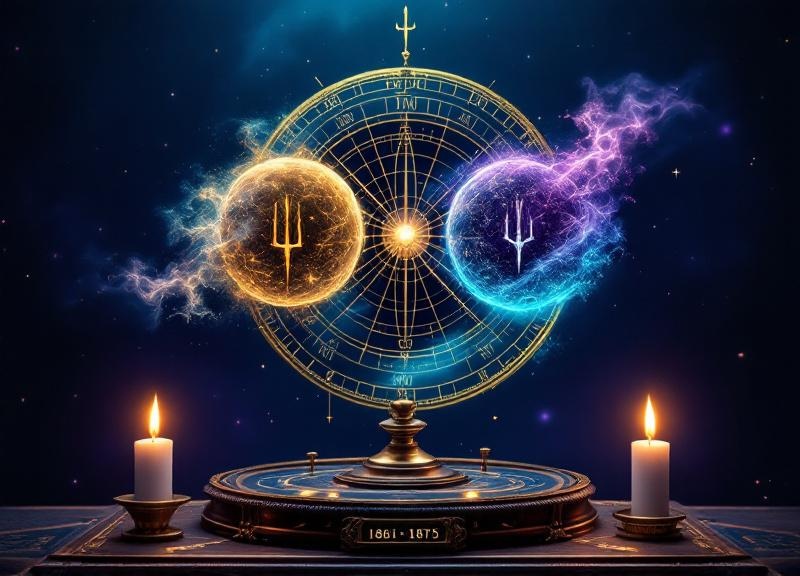
What Western Astrology Sees: The Spiritual Warrior Archetype
From a Jungian-archetypal perspective, this transit resembles an arranged marriage between two forces that didn't ask for each other. Neptune carries the energy of the Great Dissolver. Its transpersonal pull toward unity, boundlessness, and ego erosion is undeniable. Aries embodies the Hero at the threshold, perpetually oriented toward becoming. When dissolution meets emergence, psychological territory is neither comfortable nor predictable. Fertile, though. Absolutely.
The developmental invitation, as psychological astrologer Liz Greene's tradition would frame it, is to integrate the Neptune complex — the longing for oceanic merger and meaning beyond ego survival — with the Aries imperative toward authentic selfhood. The result, when it works, is what you might call the "egoless warrior": someone who acts decisively from a place of inner stillness rather than reactive fire. Exactly.
When it doesn't work? Spiritual grandiosity kicks in. But we’ll get to that.
The Generational Signature
Those born between 2026 and 2039 will carry natal Neptune in Aries — a generation marked by hunger for authentic spiritual encounter and an instinctive rejection of borrowed belief systems. In synastry and compatibility work, when a partner's personal planets contact a Neptune-in-Aries placement, classic Neptunian themes of idealization and disillusionment will have an Arian edge: disappointment arrives faster, the response may be disproportionately combative.
Key takeaway: Western astrology sees this as a rare opportunity to fuse spiritual sensitivity with courageous action — but warns that the line between sacred conviction and inflated ego will be perilously thin.
What Vedic Astrology Actually Says (and Doesn't Say)
Here's where honesty is crucial. Classical Vedic astrology (Jyotish) does not recognize Neptune as a graha. The foundational texts — Brihat Parashara Hora Shastra, Saravali, Phaladeepika — work with the Sapta Grahas (seven visible planets) plus the lunar nodes Rahu and Ketu. Any Jyotish practitioner claiming Neptune has a classical pedigree is importing Western discovery into a different cosmological system. No doubt.
This isn’t a limitation; it's a different lens. Easily.
The Nakshatra Map
What Jyotish does recognize is the importance of Mesha (Aries) and the three nakshatras (lunar mansions) it contains. These offer a more detailed timeline than Western sign-based analysis:
- Ashwini (0°–13°20') — Ruled by the Ashwini Kumaras, divine physicians. Carries the shakti of swift healing. The early years (roughly 2026–2030) activate themes of sudden spiritual awakening and medical innovation. This energy doesn’t contemplate. It acts.
- Bharani (13°20'–26°40') — Ruled by Yama, god of death and cosmic law. Possesses the power to "carry things away." The middle years confront us with what must die so that spiritual integrity can be born.
- Krittika (26°40'–30') — Ruled by Agni, the fire god. Holds Dahana Shakti — power to burn impurity. Final years bring purification through sharp discernment.
From a Vedic standpoint, your Vimshottari Dasha (planetary period) determines personal activation far more than transits. Someone running a Shani (Saturn) Mahadasha experiences discipline and contraction; a Guru (Jupiter) Mahadasha native finds expansion. Your birth chart — specifically your natal Mars placement — tells more about Mesha's energy in your life than outer-planet transits.
Key takeaway: Vedic astrology offers a richer, more individually calibrated framework through nakshatras and dashas — but fundamentally refuses Neptune the authority Western astrologers ascribe to it. Both perspectives matter.
The 1861–1875 Parallel: What Happened Last Time
Every expert consulted pointed to the same historical window: Neptune's last transit through Aries, approximately 1861–1875. The convergence is striking to skeptics and believers alike. Intriguing.
This was the era of the American Civil War, the abolition of serfdom in Russia, the first stirrings of labor movements, and Darwin's On the Origin of Species being culturally metabolized. People were willing to die for visions of freedom rather than simply dream about them. The spiritual warrior — someone acting from sacred conviction — was culturally legible in a remarkable way.
But there's an insight often missed: that era also produced the first Western interest in Eastern contemplative traditions. The Theosophical Society was founded in 1875, at Neptune's Aries exit. Victoria Woodhull fused trance mediumship with suffrage activism. Walt Whitman's Drum-Taps dissolved the spiritual self into the democratic wound, then reconstituted it as individual witness. Mystical and martial fused into a new grammar. Fascinating.
We're at that construction site now.
A Necessary Data Check
The honest position here: no peer-reviewed studies prove causal relationships between Neptune's sign position and measurable social phenomena. Correlations are historical observations. Research by Geoffrey Dean and others has shown these broad outer-planet claims are least testable in astrology and prone to bias. Assigning sweeping meaning to a 13-year transit can retrofit anything into a narrative. Skepticism is worth holding alongside pattern recognition.

The Shadow Side: Spiritual Grandiosity and Deluded Crusaders
Every tradition warns about danger from different angles. Neptune in Aries produces both the spiritual revolutionary and the deluded crusader. The line between these figures is the central moral question of the next thirteen years.
Shadow material includes:
- Spiritual competitiveness — using visionary experience or personal transformation as identity and social currency
- Impulsive idealism — burning bridges before understanding the construction
- Prophetic inflation — mistaking intensity for depth, confusing personal conviction with universal truth
- Collapse of communal spiritual structures — Aries refuses sustained submission to external authority, even beloved teachers, leading to liberation or isolation depending on the individual
The Western psychological view sees this as the risk of Neptune "glamorizing" the Aries impulse. The Vedic framework speaks of Mesha's rajasic (passionate, active) quality, without dharma grounding, collapsing into aggression. Different language, same warning.
The Cultural Shift Already Underway
The trends are already visible. Post-pandemic spiritual culture shows measurable fragmentation of communal practice into highly personalized, solo-practitioner frameworks. Independent spiritual content creators have largely displaced institutional teachers. According to Pew Research, Americans identifying as "spiritual but not religious" rose from 19% in 2012 to over 33% by 2023. It's clear.
Neptune in Aries won't invent spiritual individualism — it will accelerate it. Through the early 2030s, expect individualized spiritual frameworks to scale into new orthodoxies, then fragment again. With Pluto in Aquarius running simultaneously, a technological dimension arises: AI-mediated spiritual experience, algorithmically personalized cosmologies, and commodification of mystical states all become plausible phenomena in Neptune-in-Aries, running through Aquarian infrastructure.
Consistently, history shows: Neptune in Aries does not produce organized new religions. It produces prophets, manifestos, and spiritual lone wolves.
Practical Guidance for 2026–2039
Theory becomes practice. Drawing from both traditions:
Practice purposeful solitude. Create deliberate space to test your spiritual impulses without amplification of collective enthusiasm. Regularly ask yourself: Is this conviction mine, or absorbed from the field?
Strengthen your Lagna Lord. From a Vedic perspective, your ascendant ruler represents your dharmic purpose — the faculty this period sharpens or destabilizes. Check your birth chart and work with your Lagna Lord's appropriate mantra.
Journal your visions — and date them. Write down moments of strong spiritual conviction. Return in six months. Neptune asks you to believe; Aries asks you to act. Wisdom demands discerning which visions are genuinely yours before action.
Work with the Aries New Moon ritual. On each Aries new moon from 2026 to 2039, write one sentence naming a spiritual truth you're willing to act on — not contemplate, theorize, within the next lunar cycle. Keep these sentences. By 2039, they'll record who you became.
Examine your natal Mars. Its sign, house, and condition tell more about this era's activation for you personally than generational transit readings. Use our astrology calculators to find yours.
Shadow-journal around anger at spiritual figures. Teachers, institutions, movements — that anger often contains buried idealism, and idealism returned to consciousness becomes fuel.
Quick-Reference: Neptune in Aries by Tradition
| Dimension | Western Psychological Astrology | Vedic / Jyotish Framework | Cultural-Sociological View |
|---|---|---|---|
| Core Theme | Integration of dissolution and selfhood; the "egoless warrior" | Mesha activates dharmic initiation; nakshatra shaktis provide specific timing | Spiritual individualism accelerates; communal seeking fragments |
| Primary Risk | Spiritual grandiosity; Neptune glamorizing the ego | Rajasic impulse without dharmic grounding becomes aggression | Lone-wolf prophets; commodified mysticism |
| Key Opportunity | Acting from sacred conviction instead of strategic self-interest | Ashwini shakti: swift spiritual healing; Bharani: purification through release | New spiritual language built around embodied action |
| Historical Precedent | 1861–1875: idealism personalized; dying for freedom visions | Nakshatra-level analysis; individual dasha overrides collective transit | 1861–1875: radical individualism, not organized religion; birth of Theosophy |
| Confidence Level | Moderate to High | Moderate (high on nakshatra; refuses Neptune as graha) | Moderate (trends documented; causal claims speculative) |
Frequently Asked Questions
When exactly does Neptune enter Aries?
Neptune first touches Aries briefly around March 30, 2025, retrogrades back into Pisces, then fully commits on January 26, 2026. It stays in Aries until approximately 2039. Though early stirrings might be felt in 2025, sustained energy begins in 2026.
Does Neptune in Aries affect my zodiac sign directly?
Every zodiac sign will experience this transit differently depending on which house Aries occupies in your chart. A generational transit like this sets the collective tone. Your personal experience depends on your complete natal chart, not just your Sun sign. From a Vedic perspective, your running dasha period matters more than the transit itself.
Is this really a "spiritual revolution"?
That depends. Western astrologers see rare archetypal territory — Neptune visits Aries once every 165 years. Cultural data supports a measurable shift. But the Vedic tradition locates revolution in your individual karma and dasha sequence, not a single slow-moving transit. Data-minded astrologers rightly note that 13-year predictions are unfalsifiable. Our honest take: it will reshape the texture of spiritual culture. Revolution? Depends on actions.
What about babies born during Neptune in Aries?
Children born 2026–2039 carry natal Neptune in Aries as a generational signature. Western astrology anticipates a cohort with an instinctive hunger for authentic spiritual experience and rejection of borrowed beliefs. If you're choosing baby names or considering your child's chart during this period, know that the house placement and aspects to Neptune matter more than the sign alone.
How can I prepare for this transit right now?
Begin by examining which spiritual habits from the Neptune-in-Pisces era served you and which were escapism. Be honest. Locate Mars in your birth chart — its condition tells how Aries energy functions in your life. Start testing convictions: write them down, date them, revisit them. Fog clearing. Your next steps? Critical.
Internal Link Suggestions:
- Birth Chart Calculator — referenced multiple times for natal Mars and Lagna Lord exploration
- Compatibility / Synastry — linked in the generational signature section
- Zodiac Signs — linked in FAQ about sign-specific effects
- Astrology Calculators — linked in practical guidance for finding natal Mars
- Baby Names — linked in FAQ about children born during the transit
Ready to explore your cosmic blueprint?
Discover what the stars reveal about your unique path.
Check Your Transit Chart

