Saturn-Neptune in Aries & Uranus in Gemini: 2026 Reset
By Deluxe Astrology
Saturn-Neptune conjunctionUranus in Gemini2026 astrologycollective changeinnovation astrology

আপনার জন্মের সময় প্রতিটি গ্রহ কোথায় ছিল তা দেখুন
আপনারা কতটা সামঞ্জস্যপূর্ণ? ৩৬-পয়েন্ট স্কোরিং
বিভাগীয় চার্ট বিশ্লেষণ
চন্দ্র নক্ষত্র ক্যালকুলেটর
বৈদিক আবেগজনক প্রোফাইল
গ্রহীয় পর্যায় সময়রেখা
প্রতিকারমূলক জ্যোতিষ ব্যবস্থা
কৃষ্ণমূর্তি পদ্ধতি
আপনার রাশি যা স্বীকার করবে না
ব্যক্তিগত ফেং শুই
আপনার জন্য সেরা শহর, মানচিত্রে
৪-সিস্টেম একীভূত দৃশ্য
রাশি-সুরক্ষিত সিকোয়েন্স
৬টি গ্রহাণু আর্কিটাইপ
ধরন, কর্তৃত্ব এবং গেট
১০০+ রাশি-মিলিত পাথর
ব্যক্তিগত শক্তির দিন
By Deluxe Astrology
You might already sense it—the subtle undertone beneath everyday life, an inkling that the fundamental rules are shifting. Faith in long-standing organizations is at unprecedented lows. Decentralized communities, member-owned cooperatives, and open-source AI initiatives are gaining speed. People aren't merely discontent; they are actively crafting alternatives on the fly.
This is the fertile ground into which three monumental astrological events will drop in 2026: Saturn and Neptune unite at 0° Aries in February, Uranus steps into Gemini (after its first ingress in July 2025), and an unusual four-planet basket configuration forms in July. Whether you interpret charts daily or simply feel the evolving societal climate, 2026 deserves your notice.
The story the sky is weaving is akin to this: the six-year dismantling set off by the Saturn-Pluto conjunction of January 2020 is entering its wrap-up phase. That 2020 alignment didn't just close a chapter — it razed the entire library. What we've been grappling with since is the long, bewildering aftermath. February 2026 marks the dawn when something bold must be intentionally crafted from the ruins.
The pivotal word here is intentionally. Saturn demands it. Neptune may dream up the master plan, but Saturn insists you pick up the tools and get to work.
Saturn-Neptune encounters occur approximately every 35 to 36 years, and they consistently align with what one might term "reality negotiations" — epochs when collective aspirations clash with established systems. The 1989 meeting in Capricorn coincided with the disintegration of the Soviet Union. The 1952–53 union in Libra saw the post-war idealism of the United Nations tested by emerging geopolitical strains.
Each cycle poses a timeless question: Which of our collective dreams have the bones to stand, and which evaporate under scrutiny?
This time, the conjunction arrives at 0° Aries — the World Axis, the zodiac's starting point, the spring equinox mark. In both Western and Vedic traditions, this position bears tremendous universal influence. A conjunction here doesn't hint at change. It declares it.
You'll come across claims that this is "the first Saturn-Neptune conjunction at 0° Aries in 2,000 years" making rounds widely. All four contributing viewpoints highlight this as poetic rather than a documented astronomical fact. The symbolic significance is undeniable without stretching the timeline.
Key takeaway: Saturn-Neptune unions revisit the pact between our ideals and our frameworks. At 0° Aries, that reconsideration affects our shared sense of identity at its foundation — who are we rising into, and is the vision we're aiming for truly feasible?
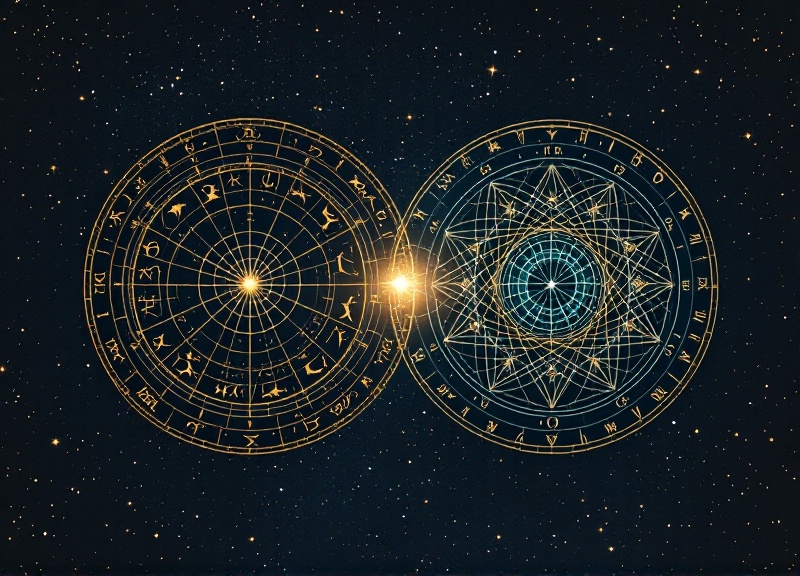
This is where things get truly intriguing, because Western and Vedic viewpoints examine this meeting from distinct angles — and the contrast between them is more enlightening than each view in isolation.
Both traditions acknowledge 0° Aries as a point of utmost mutual relevance. Both discern the Saturn-Neptune pairing as a clash between structure and unraveling. And both recognize a real inflation threat: Neptune in Aries carries the shadow of the spiritual crusader who confuses personal belief for divine decree. The Jungian outlook articulates it well — the same energy that constructs ethical, open communities can equally power messianic crusades and technological utopias.
From a Vedic perspective, the situation includes an added layer of tension that Western interpretations sometimes temper. Shani (Saturn) in Mesha (Aries) operates in the sign of his natural foe, Mars — nearing his classical point of debilitation. According to resources like the Phaladeepika, debilitated planets don't just underperform; they can cause significant earthly turmoil before their teachings settle. The union also occurs in Ashwini Nakshatra, governed by Ketu and presided over by the Ashwini Kumaras — divine healers whose prowess (Shidhra Vyapani Shakti) is quick restoration, but only after a crisis peaks. The Vedic lens is direct: this union describes compelled acceleration, where structures fall apart quicker than substitutes emerge.
The Western psychological stance is somewhat more hopeful — or at least more centered on developmental opportunity. From the Jungian school, this conjunction signals a collective individuation crisis, a moment when you're nudged toward enhanced awareness. The task, as astrologer Liz Greene described, is "the reality principle in service of the imagination." Dreams need vessels. The most productive application of this union is forming institutions, communities, and personal pledges that can support the weight of the ideals they champion.
An unanticipated cross-tradition insight: Chinese astrology adds a dynamic aspect here. 2026 is the Year of the Fire Horse, appearing every sixty years and known for its volatile brilliance — maverick individuals, shattered traditions, unstoppable progressions. The Fire Horse doesn't revive bygones. It races beyond them. Mixed with the Vedic caution about forced haste and the Western insistence on mindful vessel-building, the Chinese system forecasts whatever is established in 2026 will outpace its designers' expectations.
Three systems, formed independently, all pointing at the same archetypal threshold. That overlap is worth some contemplation.
As Saturn-Neptune grabs the headlines, Uranus in Gemini could be the transit you sense acutely in your everyday existence. Gemini governs our mental processes, dialogue, connections, and information exchange — the framework of the collective psyche. Uranus rouses and emancipates whatever it engages.
The historical analogy is noteworthy. During the preceding Uranus-in-Gemini era (1941–1949), radio achieved widespread reach, war-driven code-breaking at Bletchley Park laid computing's groundwork, and communication tech built for conflict was repurposed for peacetime nodes. We're re-entering a similar phase as generative AI restructures how language, knowledge, and social cohesion function. The symbolic link is strong enough to merit close observation.
The Vedic viewpoint enriches this further. Uranus' journey through Mithuna (Gemini) energizes the Ardra-Punarvasu nakshatra cycle. Ardra, guided by Rahu and overseen by Rudra, embodies the force of fierce destruction preceding renewal. Punarvasu, coming next, is led by Aditi — the limitless goddess — carrying the momentum of returning to illumination and plenty. This aligns with a "crisis, then reconstruction" arc through 2026.
The shadow to monitor: Uranus in Gemini can scatter as easily as it unifies. Information factionalism — where your feed becomes your canon — is as probable an outcome as authentic innovation. Intentional participation in your information spheres isn't just advisable during this transit; it's vital.
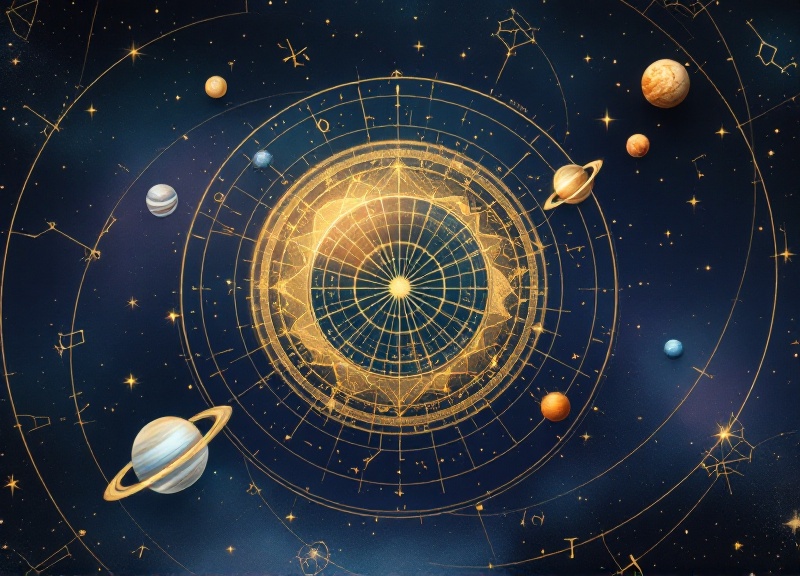
Most commentators emphasize the February conjunction by itself. Yet the true ignition happens in July 2026, when four outer planets — Neptune at 4° Aries, Uranus at 4° Gemini, Pluto at 4° Aquarius, and Jupiter at 4° Leo — create what's being called a basket or minor grand trine pattern. Four elements, each at an identical degree, forming a harmonious ensemble akin to a chord in music — generating a sound no single note can produce alone.
Jupiter in Leo at the peak holds the unexpected significance. While everyone debates whether AI will emancipate or monitor us, whether grassroots initiatives will fuse or fragment, Jupiter in Leo reminds you that the crucial determining factor is not technology or ideology. It's the individual who dares choose creative bravery over reflexive dread. Leo governs the sovereign spirit, and in 2026, sovereignty isn't a political status but a psychological one.
The February conjunction plants the seed. The July basket setup is the first tender sprout.
| Transit | Date / Window | Sign & Degree | Core Theme | Vedic Overlay |
|---|---|---|---|---|
| Saturn-Neptune Conjunction | February 20, 2026 | 0° Aries | Collective identity pivot; idealism crosses paths with structure | Shani debilitated in Mesha; Ashwini Nakshatra — swift recovery after turmoil |
| Uranus in Gemini | Throughout 2026 | Early Gemini | Communication upheaval; AI and information transformation | Ardra-Punarvasu nakshatras — tempest, then renewal |
| Jupiter enters Leo | June 30, 2026 | 0° Leo | Creative autonomy; expressive guidance | Guru in Simha — dharmic self-assurance and openhandedness |
| Four-Planet Basket Pattern | July 19–21, 2026 | 4° Aries / Gemini / Leo / Aquarius | Full surge of the 2026 reset; collective breakthrough | Jupiter as apex guardian of dharma magnifies the configuration |
Theory gratifies. Practice catalyzes transformation. Here's what the combined insights suggest:
The exact meeting period (January through March 2026) is conducive to reflection, not expansion. The July alignment opens a more promising window for unveiling new constructs, networks, and ventures. Conceive in February. Construct in July.
That statement makes a captivating headline, but every knowledgeable perspective we consulted suggests it as poetic emphasis rather than authenticated astronomical reality. What is verifiable: Saturn-Neptune unions at World Axis junctures hold historically marked weight in mundane astrology, and the 0° Aries position genuinely marks the zodiac's cornerstone. The July basket setup — four outer planets at 4° spanning four signs — is geometrically rare. There's no need to expand the timeline to take this earnestly.
That hinges entirely on your natal placements. If you have planets or angles near 0° of cardinal signs (Aries, Cancer, Libra, Capricorn), this union will resonate most strongly with you. Vedic practitioners will also want to examine nakshatra placements and current dasha cycles. A thorough birth chart analysis is optimal for grasping how this transit intertwines with your distinct blueprint.
The prior Uranus-in-Gemini period (1941–1949) coincided with the dawn of modern computing and mass broadcasting. This cycle aligns with the advent of generative AI, redefining language, knowledge creation, and social structuring. The pattern hints at expedited upheaval in communication frameworks — but Uranus can decentralize as readily as it innovates. Anticipate both genuine leaps and intensifying information tribalism. Conscious involvement with your media diet bears increased importance. Check your horoscope for sign-specific advice on this transit.
From the Vedic tradition, Blue Sapphire (Neelam) is Saturn's traditional gemstone — yet it is among the most potent and potentially volatile stones in Jyotish, only to be worn after expert evaluation of your natal Saturn. Universal, safer options include charitable deeds on Saturdays and reciting the Shani Ashtakam. Browse our crystal guide for additional insights on utilizing stones aligned with planetary energies.
Not necessarily — but the February-March period leans towards internal work, clarity, and intention-setting rather than external projects. Consider it as groundwork beneath the surface. The July basket setup, with Jupiter in Leo enlivening the broader pattern, opens a more dynamic window for launching projects, networks, and missions designed to endure. Utilize our calculators to explore how the timing resonates with your personal planetary cycles.
Saturn and Neptune meeting at 0 degrees Aries is significant because it opens a brand-new zodiac cycle at the most pioneering point in the chart. This pairing tends to dissolve old structures while seeding new ones, often sparking a tension between idealism and hard-nosed reality. The zero-degree position suggests a fresh start, though how that unfolds depends heavily on your personal chart placements.
Zero degrees Aries is the symbolic starting point of the entire zodiac, sometimes called the World Point. Planets meeting here tend to correlate with events and shifts that feel collectively noticeable, not just personal. The chart suggests this placement amplifies Saturn-Neptune themes -- restructuring dreams, questioning institutions -- giving them a more public, outward-facing quality than the same conjunction might carry elsewhere in the zodiac.
Uranus in Gemini tends to rewire how information travels, how ideas spread, and how communities talk to one another. Alongside Saturn-Neptune in Aries, this often suggests a period where new visions get broadcast quickly through unconventional channels. The combination can feel mentally restless, with old narratives breaking down and experimental ones rushing in to fill the space, sometimes faster than people can process them.
The July 2026 basket configuration is a pattern where four planets cluster in a way that concentrates energy toward a specific focal point in the chart. Basket formations tend to suggest momentum building around one particular theme or area of life. The article points to this as a moment when seeds planted earlier in the year may show their first visible growth, though the exact effects vary by individual chart.
Reviewing commitments made to institutions or belief systems you have outgrown often proves useful under Saturn-Neptune cycles. With Uranus in Gemini, staying curious and open to new information tends to serve better than clinging to fixed opinions. The article recommends treating 2026 as a planning horizon -- identifying where structures in your own life feel brittle and deciding deliberately what to rebuild, rather than letting circumstances decide for you.
Ready to explore your cosmic blueprint?
Discover what the stars reveal about your unique path.
Check Your Transit ChartGet your weekly cosmic forecast
Join 10,000+ cosmic explorers


