July 2026 Astrology: Rare Planetary Alignment Guide
By Ravi Khorana

If your social media feed is insisting that July 2026 will "activate your highest timeline" and "unlock your soul's Renaissance," you're not alone. The hype machine is running at full speed — and for once, underneath all that noise, there's something genuinely remarkable happening.
But what’s the real story? It's both less dramatic and more interesting than that marketing version. Curious? Here's what four distinct astrological traditions actually agree on, where they push back against each other, and what it all means for you.
What's Actually Happening in the Sky
Let's start with what's verifiable by looking at an ephemeris — the astronomer's calendar that tracks where planets are.
Three outer planets — Uranus, Neptune, and Pluto — are each settling into the early degrees of new signs within the same compressed window of years. This alone is unusual. Pluto has entered Aquarius. Neptune has crossed from Pisces into Aries, and Uranus is completing Taurus, approaching Gemini. Each of these sign changes, called ingresses, marks a generational shift. All three happening within a half-decade is the kind of clustering that astrologers like André Barbault spent entire careers waiting to study.
Around July 20–21, 2026, Jupiter — freshly entered into Leo — perfects a series of supportive aspects to all three outer planets: a trine to Neptune in Aries, an opposition to Pluto in Aquarius, and a sextile to Uranus in Gemini.
Here's the thing: a claim you'll see everywhere — that four planets simultaneously hit exactly 4° of their respective signs in a perfect "cradle" formation — is not supported by standard ephemeris data. It's the kind of technical embellishment that travels fast through influencer networks. What is real is that all four planets are active in early degrees of new signs within a tight window, creating a genuine harmonic pattern. The distinction matters if you care about precision — and you should.
The Renaissance Metaphor — Earned or Overhyped?
Here's a detail most interpreters miss: the historical Renaissance was not merely a celebration of light. It was a civilization processing plague, war, and the collapse of medieval certainty, reaching backward to classical wisdom and forward to empirical experiment simultaneously. It looked like beauty because it was transmuting grief.
That reframing changes everything about how to read July 2026.
The Uranus-Pluto trine forming this month is the cooperative follow-up to their wrenching square of 2012–2015 — a period marked by the Arab Spring, Occupy movements, and the first wave of smartphone-driven social disruption. What was torn apart in that era now has structural support for rebuilding. Trines and sextiles in mundane astrology — the branch studying world events — typically correlate not with crisis but with accelerated integration. Change arrives through constructive outlets rather than rupture.
So, is the "Renaissance" metaphor earned? Yes — if you understand it as a multi-year arc running roughly 2025 through 2029, not a single magical month. July 2026 is one visible crest in a longer wave. A Pew Research study found that 29% of American adults believe in astrology (37% among those under 30), which means tens of millions of people are orienting around this shared symbolic turning point. That collective attention itself can produce real cultural shifts, regardless of whether the planets mechanically cause anything.
Key takeaway: The Renaissance is real as a pattern, overhyped as a single-month event. Think of July 2026 as a doorway into a decade of rebuilding, not a finish line.
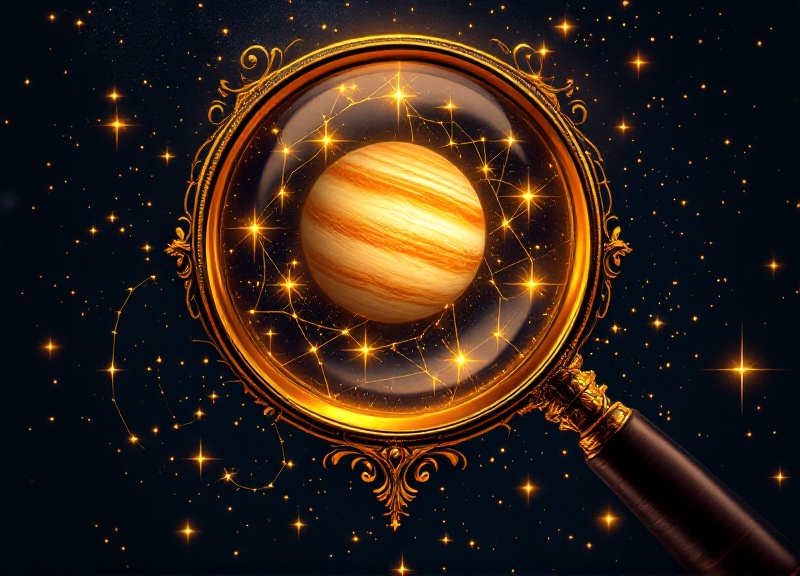
Jupiter in Leo: The Magnifying Lens
Jupiter enters Leo around June 30, 2026, and this transit carries weight across every tradition. There's significance here.
From a Western psychological perspective, Jupiter in Leo amplifies creative confidence, personal radiance, and the courage to lead. The Jungian view cautions that this same energy can inflate the ego — making channeled enthusiasm feel authoritative when it may actually be the ego ventriloquizing the transpersonal. Exactly. As psychoanalyst James Hollis suggests: when you feel certain about a spiritual insight during this period, pause and ask not "is this true?" but "whose voice is speaking here?"
From a Vedic lens, Guru (Jupiter) transiting Simha (Leo) strengthens what classical texts call Kshatriya dharma — the courage to protect, lead, and illuminate. The Saravali notes that this is not vanity or performance; it's the soul's capacity to stand in the fire of its own truth. But Simha is a royal sign, and Guru there can magnify pride as readily as wisdom.
The last Jupiter in Leo period ran from July 2014 to August 2015 — a moment that included the explosion of personal brand economics, the rise of streaming culture, and several significant displays of political spectacle. The current iteration arrives with Pluto in Aquarius as its backdrop, creating a defining tension between Leo's individual radiance and Aquarius's collective accountability.
To understand how Jupiter in Leo activates your specific chart, your birth chart is the place to start — especially if you have a Leo, Aries, or Sagittarius Ascendant.
Neptune Retrograde in Aries: The Uncomfortable Gift
Neptune stations retrograde in early Aries on July 7, and this is the transit most likely to be misread. Not quite.
Neptune retrograde in Aries is not an invitation to expanded spiritual confidence. It's a contraction, a turning inward. It asks: what spiritual story have you been performing rather than living? Where did your courage become costume?
This makes the Jupiter-Neptune trine on July 20 far more complex than it appears. Jupiter in Leo trine Neptune in Aries looks, on the surface, like permission to dream large and act boldly. But Neptune is retrograde. The dream this trine supports is not the one you projected onto the future — it's the one you recover from the depths of your own history.
The last time Neptune occupied Aries was 1861–1875. This was a period of reconstruction, industrialized warfare, and a fundamental reimagining of national and individual identity. The symbolism of Neptune in Aries — dreams weaponized, idealism embodied, spirituality made kinetic — carries historical weight that the "good vibes only" framing entirely ignores.
The Vedic Perspective: Ancestral Karma and Sacred Closure
Classical Jyotish brings a distinctive and essential layer to this conversation — one that Western astrology largely overlooks.
The lunar nodes shift to the Leo-Aquarius axis on July 26, setting up an eclipse cycle for the following eighteen months. In Vedic terms, this activates Magha Nakshatra (0°–13°20' sidereal Leo), presided over by the Pitris — ancestral spirits. Magha's power is Tyaga Shakti, the power of release. When the nodal axis activates Magha, the collective is invited to release what has been inherited that no longer serves: ancestral trauma, cultural conditioning, institutional inertia.
This is not destruction. It is consecrated letting go.
On the opposite axis, Shravana Nakshatra carries Samhanana Shakti — the power to connect, to listen, to hold diverse elements in unified awareness. The combination is striking. July 2026 presses the collective to simultaneously release old inheritance and develop new coherence.
The Vedic tradition also frames this period more soberly than its Western counterpart. Where Western astrologers see awakening, Jyotish sees what it calls Karma-Dharma axis activation — accumulated Sanchita Karma (stored karmic debt) converting into Prarabdha Karma (karma being actively lived) at an accelerated rate. Less "cosmic upgrade," more "the bill comes due, and paying it sets you free."
Where the Traditions Disagree — And Why That Matters
The most honest thing we can do is show you where these perspectives genuinely diverge:
| Question | Western Psychological View | Vedic (Jyotish) View | Cultural-Sociological View |
|---|---|---|---|
| Are Uranus, Neptune, and Pluto relevant? | Central — they are the architects of soul-level transformation | Not recognized as classical Grahas; their effects are translated through Rahu, Ketu, and Nakshatra analysis | Relevant as cultural narrative, not mechanistic causation |
| Is this a "once-in-a-lifetime" event? | The multi-year arc is genuinely rare; single-month framing overstates it | A precise once-in-a-generation claim always exceeds what any tradition can state with certainty | Marketing language that obscures a legitimately interesting longer trend |
| What is the primary tone? | Creative rebuilding after destruction — a developmental opportunity | Sacred closure and karmic acceleration — the soul completing old contracts | Civilizational reorganization — collective, not individual |
| What is the main risk? | Grandiosity dressed as awakening; ego inflation | Ego inflation through Guru in Simha; ignoring ancestral obligations | Individualizing what are fundamentally collective phenomena |
Notice how every tradition agrees on the risk of inflation and grandiosity — that's a signal worth trusting. And notice how they disagree on tone: the Western view leans toward creative possibility, the Vedic view toward sacred obligation, and the sociological view toward collective structure. You don't have to choose one. Holding all three makes you a more complete reader of this moment.
Key Dates and Your Practical Playbook
Here's your month at a glance, followed by concrete practices:
- July 7 — Neptune stations retrograde in Aries. Begin an honest inventory: where has your spiritual identity become performance?
- July 14 — Cancer New Moon conjunct retrograde Mercury. This is an excavation moment, not a declaration moment. Write down one belief you inherited about who you're allowed to be. Sit with it.
- July 17–21 — Outer-planet harmonic peaks. Jupiter perfects aspects to Uranus, Neptune, and Pluto. Keep a dream journal focused on images of authority, leadership, and creative power.
- July 23 — Mercury stations direct. The five-day window between this date and Saturn's retrograde station on July 26 is the most supported window for planting intentions aligned with the longer arc.
- July 26 — Lunar nodes shift to Leo-Aquarius. The eclipse cycle for the next 18 months is set.
- July 29 — Aquarius Full Moon. Step forward — not with the identity you performed, but with the one the inner work returned to you.
Vedic remedial practices for this period include recitation of the Guru Beeja Mantra (Om Gram Greem Graum Sah Gurave Namah, 108 repetitions on Thursdays) and Pitri Tarpana — water offerings to ancestral spirits during the New Moon — to consciously work with the Magha Nakshatra release cycle. For grounding and clarity, explore supportive crystals and gemstones aligned with Jupiter and the lunar nodes.
Psychological practices: Identify one concrete area — a creative project, a relationship, a professional direction — where you've been waiting for permission before beginning. Jupiter in Leo supported by Uranus and Neptune is precisely the configuration under which initiating from an authentic self becomes possible. Check your compatibility reading if relationships are reaching a threshold moment.
FAQ: July 2026 Astrology
Is the "cradle alignment" at exactly 4 degrees real?
Not in the precise way social media presents it. The claim that Jupiter, Uranus, Neptune, and Pluto simultaneously hit exactly 4° of their signs in a perfect geometric cradle is not supported by ephemeris data. What is real — and still genuinely rare — is that all four planets are active in early degrees of new signs within a compressed window, forming a series of supportive aspects that peak around July 20–21. The pattern is significant; the marketing just added extra shine.
How does Jupiter in Leo affect my specific sign?
Jupiter in Leo most directly benefits fire signs (Leo, Aries, Sagittarius) through amplified confidence and creative expansion, and air signs (Gemini, Libra, Aquarius) through social and intellectual growth. But the real answer depends on your rising sign and house placements. Generate your full birth chart to see which house Leo occupies in your chart — that's where Jupiter's gifts will land.
Should I be worried about Neptune retrograde?
Not worried — prepared. Neptune retrograde is not a malfunction. It's a period of inner revision where false spiritual certainties dissolve so genuine ones can emerge. If you've been performing a version of yourself that doesn't match your inner reality, this transit will make the gap uncomfortable. That discomfort is the medicine. Vedic astrology frames this as Ketu-like energy — the removal of illusion in service of liberation.
Is this really "once in a lifetime"?
The specific combination of all three outer planets repositioning into new signs within the same half-decade, with Jupiter activating all of them simultaneously, will not repeat in your lifetime. In that sense, yes. But framing July 2026 as a single magic month misses the point. This is one visible peak in a wave running roughly 2025 through 2029. The soul evolution this period invites is a practice, not a single event. Stay current with the unfolding story on our astrology blog.
What's the single most important thing I can do during July 2026?
Every tradition we consulted agreed on one thing: the primary risk of this configuration is grandiosity — mistaking ego inflation for spiritual awakening. So the single most important practice is honest self-inquiry. Before you launch, declare, or proclaim, ask yourself: Is this truth speaking, or is this my ego wearing truth's clothing? If the answer is genuine, act boldly. Jupiter in Leo rewards authentic courage. It just doesn't reward performance.
Frequently Asked Questions
Is the July 2026 planetary alignment actually rare, or is that just hype?
The alignment is genuinely uncommon, though rarity alone does not guarantee dramatic personal outcomes. Several planets occupy positions that do not repeat in this configuration for decades, which gives astrologers across multiple traditions something real to discuss. The hype tends to outrun the sky itself, so approaching it with curiosity rather than expectation often serves people better.
What does Jupiter in Leo mean for me during July 2026?
Jupiter in Leo tends to amplify themes of creativity, visibility, and confidence in the areas of your chart it touches. It often functions like a magnifying lens -- whatever is already present gets larger, which can mean growth but also excess. The chart suggests opportunity rather than certainty, so channeling that energy with some intention tends to produce steadier results.
What is Neptune retrograde in Aries, and should I be worried?
Neptune retrograde in Aries is often described as an uncomfortable but useful period for re-examining where personal ambition may be mixed with illusion. Rather than something to fear, it tends to surface what was already unclear. Astrologers in multiple traditions treat retrograde cycles as times for reflection, and this one often rewards honesty with yourself over forced forward momentum.
Do Western and Vedic astrology agree on what July 2026 means?
They share some common ground but also push back against each other in meaningful ways. Western astrology tends to focus on psychological themes like creativity and identity, while the Vedic perspective often emphasizes ancestral karma and cycles of closure. Where traditions disagree, that tension is actually informative -- it suggests the period carries more than one kind of meaning depending on your lens.
Are there specific dates in July 2026 I should pay attention to?
The article outlines key dates tied to exact planetary positions, which tend to carry stronger symbolic weight than the surrounding weeks. Rather than treating those dates as fixed turning points, many astrologers suggest using them as prompts for reflection or intentional action. The energy around an exact alignment often builds several days before and lingers for a short period after.
Ready to explore your cosmic blueprint?
Discover what the stars reveal about your unique path.
Check Your Transit Chart

