Past Life Reading: What Your Birth Chart Reveals
By Ravi Khorana

Your Birth Chart Is a Karmic Ledger
Your birth chart is not a personality assessment. It is, in the words of the Vedic tradition, an exact accounting of your soul's accumulated journey — what you have carried forward, what is unfolding now, and what choices remain. The Sanskrit term for this is janma kundali, and the classical texts are strikingly straightforward about its purpose: the planets trace what occurred before your arrival.
Imagine it like a river. You did not arrive at the bank where water begins to flow. Your chart captures the current at the instant it reaches you — bearing silt, energy, and the essence of terrains it has traversed. A past life reading through astrology operates with exactly this idea: the sky at your birth reflects the imprint of everything your soul brought into this life.
Whether you take reincarnation literally or see it as a compelling metaphor for deep-seated psychological conditioning, the chart placements we are about to discuss hint at the same phenomena — patterns that feel ancient, instinctive, and mysteriously charged with meaning before you have done anything in this life to deserve them.
Key takeaway: Your chart does not forecast who you will become. It details where your soul is arriving from and what it is here to address this time around.
The Rahu-Ketu Axis: Where You Have Been and Where You Are Heading
If there is one point where Vedic and Western astrology speak in almost perfect harmony, it is here. The lunar nodes — called Rahu (North Node) and Ketu (South Node) in Jyotish — form the primary axis for past life analysis across both traditions.
Ketu (South Node) depicts what the soul has already conquered. In Vedic astrology, Ketu is classified as the moksha karaka — the signifier of liberation — and it governs detachment, past-life leftovers, and intuitive proficiency. Whatever sign and house Ketu resides in your birth chart, there you will find skills that surface almost too effortlessly. The reason for that ease: your soul has been rehearsing.
Rahu (North Node) designates the frontier of growth. This is unexplored terrain — the realm of life where you feel clumsy, eager, and a bit obsessed. The Vedic tradition regards Rahu as a shadowy entity with complete planetary influence, governing desire and the soul's unfinished curriculum. Western evolutionary astrology frames it as the growth edge, the direction of development.
Nakshatra Adds Precision
Here is where the Vedic system offers a layer of detail that Western astrology usually does not. Ketu's nakshatra (lunar mansion) placement narrows the narrative significantly. For example:
- Ketu in Ashwini nakshatra (ruled by the Ashwini Kumaras, divine healers) suggests lifetimes spent in crisis intervention — adept at swift responses, yet harboring restlessness that opposes completion.
- Ketu in Rohini points to ingrained attachment to material beauty and sensory delight. The soul arrives with refined aesthetic instincts but must confront the raga (desire-attachment) entwined in those instincts.
- Rahu in Jyeshtha draws the soul toward leadership and the burden of responsibility — daunting precisely because authority is a novel karmic domain.
Key takeaway: Your South Node shows where you excel without effort. Your North Node shows where you are being beckoned to grow. The unease surrounding your North Node is not a barrier — it is a direction.
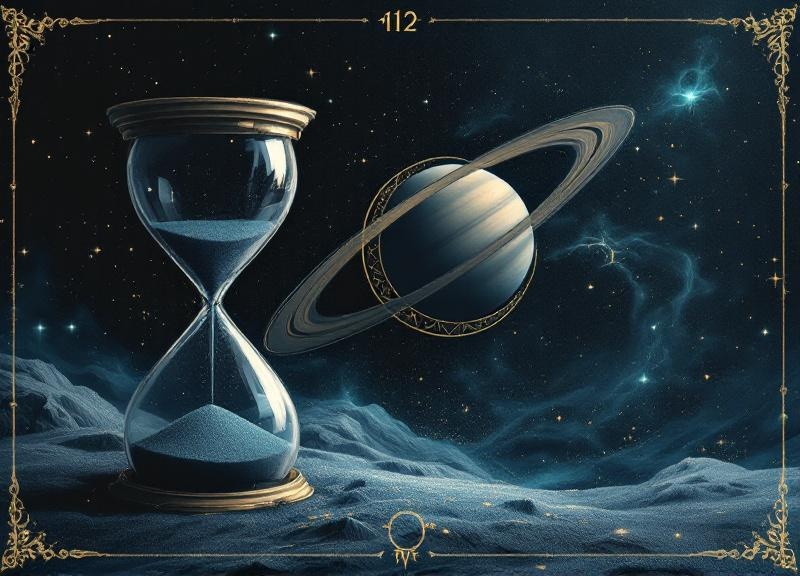
The 12th House and Saturn: Unfinished Business
The 12th house (vyaya bhava in Vedic terminology) functions as the chamber of dissolution — the area where experiences from earlier cycles wait, not yet fully processed. Both traditions agree on this, though they frame it differently.
In classical Jyotish, planets residing in the 12th house — particularly Saturn, the Moon, or the Sun — display qualities the soul seeks to release or transform. The Saravali, one of the essential classical texts, treats Saturn in the 12th house as indicative of karma linked to solitude, limitation, and institutional confinement — lifetimes in monastic settings, prisons, or situations of significant restriction. The recommended course of action is consistent spiritual practice, as the karma is aged and deep-rooted.
From a Jungian psychological perspective, the 12th house is viewed as the domain of the personal unconscious most thoroughly intertwined with collective material. Planets here operate beneath normal consciousness, influencing behavior in ways that feel fated precisely because they are elusive to the ego. Saturn in the 7th house, for instance, does not necessarily imply you "failed at relationships in a past life." It suggests the psyche approaches partnership with an ingrained fear of inadequacy — and that genuine growth lies through committed relational work.
This is one of the real tensions between traditions. The Vedic perspective interprets karmic placements as specific biographical traces. The Western psychological perspective interprets them as archetypal conditioning. Both are insightful. Neither holds the final answer.
Key takeaway: Wherever Saturn lands in your chart, he requires you to build from scratch — without inherited shortcuts — because the soul has unfinished business in precisely that area.
The Moon: The Overlooked Karmic Record-Keeper
Here is a revelation that most past life readings completely miss: the Moon is the original karmic record-keeper, and she is often eclipsed by the nodes.
The Vedic tradition grasped this with complete clarity. Your Moon's sign and nakshatra placement describe the amassed emotional patterns of the soul across incarnations — not what you are meant to do, but what you have already become so deeply that it operates as instinct. Your Moon does not define who you are striving to be. It characterizes who you already were upon arrival.
The practical action is to cross-reference your Moon's nakshatra with your South Node sign and house. They usually narrate the same story twice — the Moon as the emotional texture of past experience, the South Node as the structural context. Together, they uncover both the emotional tone and the life setting the soul is recalling and releasing.
This is a nuance that one tradition maintains with particular clarity, and it is worthy of attention.
Where the Traditions Agree — and Where They Clash
Points of agreement:
- The lunar nodes are the central axis for past life and karmic analysis.
- The 12th house retains pre-incarnate or unconscious residue.
- Saturn delineates areas of concentrated karmic labor.
- The south node represents what comes naturally — sometimes perilously so.
Points of honest tension:
- Literal vs. metaphorical: Vedic astrology regards past-life analysis as technical and literal. Western psychological astrology presents it as a therapeutically helpful metaphor. The Cultural Contextualist perspective observes that there is no peer-reviewed empirical evidence supporting past-life readings as biographical records — however, narrative psychology research consistently indicates that explanatory frameworks for distress enhance coping outcomes, regardless of their literal truth.
- Evaluation of the South Node: Vedic tradition considers Ketu as both a benefit and a caution — mastery that can solidify into evasion. Western evolutionary astrology tends toward a more linear growth model, emphasizing the North Node as the "correct" path. The richer synthesis is to honor what Ketu brings without letting the familiar turn into a refuge.
- The atmakaraka system: The Jaimini school of Vedic astrology recognizes the atmakaraka — the planet holding the highest degree in your natal chart — as the indicator of the soul's profound karmic agenda. This has no direct Western parallel and adds a layer of analysis that Western practitioners often do not employ.
Resolving these tensions is unnecessary. Both perspectives can be held to discover what each reveals.

Quick-Reference: Key Past Life Indicators in Your Chart
| Chart Indicator | What It Reveals | Tradition | Where to Look |
|---|---|---|---|
| Ketu (South Node) | Past-life mastery, instinctive patterns, what you are releasing | Both Vedic and Western | Sign, house, and nakshatra of Ketu |
| Rahu (North Node) | Evolutionary frontier, unfamiliar growth direction | Both Vedic and Western | Sign, house, and nakshatra of Rahu |
| 12th House planets | Unresolved residue, unconscious material from prior cycles | Both Vedic and Western | Any planets in the 12th house; 12th house lord |
| Saturn (house and sign) | Area of concentrated karmic work, where shortcuts are denied | Both Vedic and Western | Saturn's house, sign, and aspects |
| 5th House / Purva Punya | Accumulated merit from past lives | Vedic (primary) | 5th house lord strength and placement |
| Atmakaraka | The soul's defining karmic signature across incarnations | Vedic (Jaimini system) | Planet with highest degree in the natal chart |
| Moon's nakshatra | Accumulated emotional patterning of the soul | Vedic (primary) | Moon's nakshatra and ruling deity |
Practical Steps to Read Your Own Karmic Signature
You do not need to await a professional reading to commence this work. Here are concrete starting points:
Generate your Vedic birth chart. Use our birth chart tool and note the sign, house, and nakshatra of both Rahu and Ketu. Study the ruling deity and shakti (power) of Ketu's nakshatra — that deity symbolizes an archetype the soul has been in connection with over time.
Analyze your 5th house. A robust 5th house lord in an angular house (1st, 4th, 7th, 10th) suggests significant accumulated merit. A weakened lord highlights areas needing conscious remediation before that merit becomes accessible.
Cross-reference your Moon's nakshatra with your South Node. Seek the overlapping narrative — the emotional texture and structural context the soul is both recalling and releasing.
Review your current Vimshottari dasha. If you are in a Ketu dasha, anticipate old patterns, anxieties, and compulsions to emerge with heightened intensity. This situation is not breakdown — it represents accelerated karmic processing. Working with a Vedic practitioner during this period may prove remarkably fruitful.
New Moon ritual. At each new moon that aligns with or opposes your natal South Node, ponder this question before sleep: What am I adept at that I use to evade rather than contribute? Write the answer without editing. The nodal cycle concludes in approximately 18.6 years — even a single cycle of this journaling becomes a living document of the soul's current chapter.
Vedic mantra for Ketu remediation: The mantra "Om Kem Ketave Namah" recited 108 times on Tuesdays or during Ketu hora directly addresses the unresolved remnants Ketu carries.
Frequently Asked Questions
Can my birth chart actually tell me who I was in a past life?
Honestly? That depends on which tradition you are engaging with and how literally you accept the framework. Vedic astrology treats the Rahu-Ketu axis, 12th house, and atmakaraka as genuine indicators of prior-life experience — not metaphor. Western psychological astrology interprets the same placements as maps of deep unconscious conditioning. Both approaches yield insightful, actionable insight. What the chart will not give you is a name, date, and location from a previous incarnation. What it will provide is the pattern — and the pattern is where the genuine work lies.
What is the single most important placement for a past life reading?
The Ketu (South Node) placement by sign, house, and nakshatra is the consensus starting point across both Vedic and Western traditions. It reveals what the soul has already mastered, what feels instinctive, and what patterns may be operating on autopilot. If you explore nothing else, explore Ketu.
Is there any scientific evidence for past life readings?
No peer-reviewed empirical study has validated past-life readings as literal biographical records. The most cited study — Shawn Carlson's 1985 double-blind test published in Nature — found natal chart interpretations performing at chance levels. That said, narrative psychology research consistently shows that meaningful explanatory frameworks for suffering improve coping and self-understanding, regardless of their literal truth. The past-life framework works as a powerful container for genuine inner work. Hold that distinction with care.
How is a Vedic past life reading different from a Western one?
Vedic astrology offers more structural precision — nakshatra-level detail, dasha timing, the atmakaraka system, and specific remedial measures like mantras and charitable practices. Western karmic astrology tends toward psychological depth, drawing on Jungian archetypes, shadow work, and contemplative inquiry. The best readings draw from both. You can start with your Vedic birth chart and bring a Western psychological lens to the interpretation.
I am in a Ketu dasha right now. Should I be worried?
Not worried — alert. Ketu dasha reliably surfaces past-life patterns: old fears, inexplicable compulsions, sudden releases, and a sense that the ground is shifting beneath familiar identities. It can feel disorienting, but it is one of the most productive periods for karmic work. Think of it as the soul doing accelerated housecleaning. Structured spiritual practice, working with a skilled Jyotish practitioner, and the Ketu mantra mentioned above can all support you through this period.
Frequently Asked Questions
What parts of a birth chart are most associated with past lives?
The Rahu-Ketu axis, the 12th house, Saturn, and the Moon are the primary indicators astrologers examine for past life patterns. Ketu in particular tends to show qualities and burdens carried forward, while the 12th house often reflects unfinished karmic business. Together these points offer a layered picture of what the soul appears to have brought into this lifetime.
Does a past life reading tell you exactly who you were in a previous life?
The chart suggests tendencies and themes, not a precise biography. Astrology can point to recurring patterns, unresolved fears, or innate talents that feel oddly familiar, but it does not name specific identities or historical periods with certainty. Treating the reading as a map of soul tendencies rather than a factual record tends to yield the most honest and useful insights.
What does Ketu in my birth chart mean for past lives?
Ketu often represents what the soul has already mastered or overworked in previous cycles. Its sign and house placement tends to show where natural ability exists alongside a quiet sense of exhaustion or detachment. Many traditions read Ketu as the point of release, suggesting the soul is ready to move beyond those familiar patterns rather than repeat them.
How does Saturn relate to karmic debt in astrology?
Saturn is widely considered a planet of accumulated consequence, reflecting lessons that may have been avoided or incompletely learned. Its placement in the birth chart often points to areas where effort feels heavier and progress slower, which many astrologers read as a signal that the soul is working through long-standing obligations. Patience with those areas is commonly advised.
Do Western and Vedic astrology read past lives the same way?
The two traditions share certain markers -- the lunar nodes and Saturn appear prominently in both -- but their frameworks differ. Vedic astrology tends to treat karma and reincarnation as foundational assumptions built into the system, while Western approaches often treat them as optional interpretive layers. Where they overlap, the agreement can feel especially meaningful to readers who study both.
Ready to explore your cosmic blueprint?
Discover what the stars reveal about your unique path.
Get Your Vedic Birth Chart

