How to Parent a Pisces Child: Nurturing Your Little Dreamer

Your Pisces Child Isn't Spaced Out — They're Receiving
Here's the thing about your little fish: that faraway look in their eyes during dinner, the dreamy pause before answering a question, the way they seem to vanish into themselves mid-conversation — none of it is a problem. Exactly. Across every astrological tradition we've consulted, the consensus is striking and unanimous. Your Pisces child's rich inner world is not a developmental delay. It is a form of intelligence.
In the Vedic tradition, the sign of Meena (Pisces) is classified as a Jala (water) rashi of dual nature — two fish swimming in opposite directions, symbolizing a soul that lives simultaneously in the visible and invisible worlds. Classical texts like the Brihat Parashara Hora Shastra describe this child as one who doesn't merely imagine — they perceive. The boundary between the subtle and the gross remains thin for them, often throughout their entire life.
From a Western psychological perspective, the Jungian view is remarkably similar: the Pisces child has an unusually permeable membrane between ego consciousness and the deeper waters of the collective unconscious. As astrologer Howard Sasportas put it, Neptune — the modern ruler of Pisces — "refuses to be contained by the merely personal."
The error most parents make? Treating this inner life as an inconvenience to be managed rather than a faculty to be trained.
Key takeaway: The staring into middle distance that teachers sometimes pathologize is your child harvesting something real. Respect it before you redirect it.
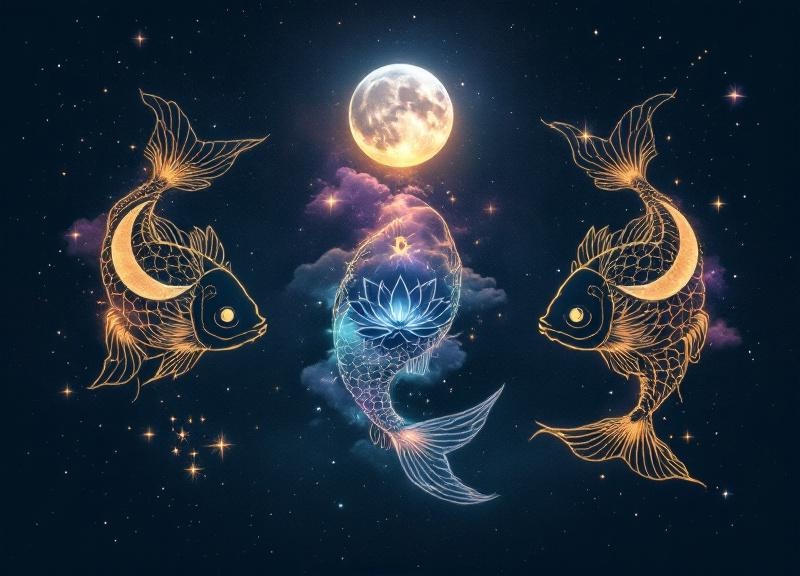
Two Traditions, One Truth: Why Jupiter and Neptune Both Matter
Here's where things get interesting — and where Vedic and Western astrology actually disagree about your child's cosmic ruler, yet somehow arrive at the same parenting advice.
Western astrology assigns Neptune as the ruler of Pisces: the planet of dissolution, dream, divine imagination, and — in its shadow — fog. Neptune was discovered in 1846, and before that, even Western astrologers gave Pisces to Jupiter. That older rulership still pulses beneath the surface.
Vedic astrology never adopted Neptune at all. In Jyotish, Meena belongs entirely to Guru (Jupiter), known as Brihaspati — the teacher of the gods, the keeper of sacred knowledge. Jupiter's highest function is Jnana, wisdom that transcends pure logic. The Meena child arrives with this faculty already active.
So what does this tension mean practically? Jupiter gives your Pisces child their faith, generosity, and capacity to believe in things unseen. Neptune gives them the oceanic feeling, the permeability, the creative vision — and yes, the tendency to dissolve when things get hard. Together, they produce a child who is simultaneously the most trusting and the most easily overwhelmed person in any room.
Both traditions agree: this child is a seer, not a space cadet. Whether you frame it through Jupiter's sacred wisdom or Neptune's archetypal imagination, the parenting approach is the same — honor the depth, provide the structure.
The Emotional Sponge Effect: What Every Parent Needs to Know
Every expert we consulted flagged the same phenomenon, and it deserves your full attention: Pisces children absorb emotions that don't belong to them.
The Vedic tradition attributes this to Jala tattva (the water element). Your child takes on the emotional textures of their environment with extraordinary sensitivity. As classical texts note, they feel the argument you had with your partner two days ago as though it's happening inside their own body. They carry a schoolmate's sadness like a stone in their chest.
From the Jungian perspective, this is the early formation of what analysts call the puer or puella wound — a loss of authentic selfhood in service to emotional relatedness. In family systems, this child often unconsciously assumes a caretaking role, absorbing parental anxiety and attempting to smooth tensions they didn't create.
Developmental psychology backs this up. Research on Highly Sensitive Persons (HSP), pioneered by psychologist Elaine Aron, estimates that 15–20% of the population carries this trait. A 2022 meta-analysis in Personality and Individual Differences confirmed that highly sensitive children show significantly elevated creative output in low-stress, emotionally validating environments — and significantly elevated anxiety and withdrawal in high-conflict or dismissive ones.
This is not fragility. This is perception. Your parenting task is threefold:
- Name your own feelings directly, so your child doesn't have to guess at them or carry them.
- Help your child distinguish between their own emotions and those they've absorbed from others.
- Protect them from chronic conflict environments — not through overprotection, but through conscious curation.
Key takeaway: Emotional transparency from you is the single greatest gift you can offer this child. Model that feelings can be present without being catastrophic.
The Nakshatra Layer: Not All Pisces Children Are the Same
One insight that only the Vedic tradition captures with this level of precision: your Pisces child's specific nakshatra (lunar mansion) dramatically shapes their expression. Three nakshatras span Meena, and each carries a distinct flavor.
- Purva Bhadrapada (final quarter): Intense, spiritually charged, and occasionally eruptive. These children carry a transformative fire beneath the Piscean water.
- Uttara Bhadrapada: Ruled by Shani (Saturn) and presided over by Ahir Budhnya, the serpent of the deep. Children born here often report vivid dreams, past-life impressions, or inexplicable emotional resonances from early childhood. Saturn's involvement lends surprising endurance beneath the softness.
- Revati: The final nakshatra of the entire zodiac, ruled by Budha (Mercury) and presided over by Pushan — the nurturer who guides souls across thresholds. Revati children are among the most tender souls in the lunar mansion cycle. They should never be rushed. Classical texts describe them as completing a great karmic journey.
To understand which nakshatra your child falls under, you'll want to look at their full birth chart, not just their Sun sign. It's crucial.

Dreams Are Not Decoration — They're a Primary Sense Organ
Every tradition we surveyed returned to the same surprising emphasis: your Pisces child's dream life is not incidental. It is central to who they are.
Neptune governs the hypnagogic state — that luminous corridor between waking and sleep where mystics, creative geniuses, and deeply imaginative children receive their most vital material. Edison famously napped with steel balls in his hands to capture those threshold flashes. Your Pisces child does this naturally, all day long, without the steel balls.
In the Vedic tradition, svapna (the dream state) is a legitimate field of knowledge, not a curiosity. Encouraging your Meena child to narrate, draw, or speak their dreams treats their inner life with the dignity it deserves.
From the Jungian perspective, dream journaling trains the ego to receive unconscious material rather than be overwhelmed by it. Ask open questions — "What did that feel like? What color was the feeling?" — rather than interpreting.
Practical steps:
- Keep a small dream journal on the nightstand starting around age five.
- Create a morning dream-sharing ritual at breakfast — even two minutes counts.
- Never dismiss a dream as "just a dream" with this child.
- Ask about feelings and images, not plots.
Families who take dream-sharing seriously report notably stronger emotional communication with their Pisces children overall. It matters.
Structured Imagination: Giving the Ocean a Shoreline
Here's where the experts diverge in an important way — and the tension is genuinely useful.
The intuitive and Vedic perspectives emphasize unstructured creative sanctuary: time in nature, open-ended drawing, clay, music, story. The child's imagination is doing spiritual work, and it should not be interrupted with demands for output.
The cultural contextualist perspective pushes back: unstructured freedom alone isn't enough. These children also need structured creative containers — collaborative storytelling, music composition, visual art with defined project endpoints. The imagination needs a skeleton to move within. Without that structure, the dreamer creates nothing tangible, and the gap between inner richness and outer competence widens.
Both views are right, and the balance shifts with age. Younger Pisces children (under seven) benefit most from open-ended creative play. As they grow, gently introduce structure — not to constrain the imagination, but to give it somewhere to land. This is the difference between a dreamer who creates and one who only retreats.
One beautiful ritual that bridges both approaches: each Sunday evening, sit with your Pisces child in low, warm light. Invite them to name one image, one feeling, or one dream fragment from the past week. Don't analyze it — simply receive it, as you would a poem. Then together, name one intention for the week ahead. Write both down.
Quick Reference: Pisces Child Parenting Guide
| Area | What to Do | What to Avoid |
|---|---|---|
| Emotional support | Name your own feelings openly; help them distinguish absorbed emotions from their own | Dismissing their sensitivity as "too much" or "dramatic" |
| Creative development | Provide art supplies, music, storytelling, and clay; add structure as they grow | Demanding measurable output from every creative activity |
| Dream life | Keep a dream journal; share dreams at breakfast; ask about feelings, not plots | Saying "it was just a dream" or pathologizing vivid dreaming |
| Grounding practices | Barefoot time outdoors, water play, simple breathing exercises (Nadi Shodhana) | Overscheduling; constant screen exposure; chaotic environments |
| School and social life | Advocate for their pace; allow recovery time after social intensity | Forcing them to "toughen up" or punishing withdrawal |
| Spiritual/ritual life | Weekly intention-setting; Thursday generosity rituals (Vedic); moon-timed reflections | Ignoring their natural spiritual instincts or dismissing them as fantasy |
The Coming Cultural Shift Parents Should Watch For
One expert raised a point that deserves its own spotlight. Neptune is preparing to leave Pisces and enter Aries in 2025–2026 — the first sign change in over thirteen years. The cultural discourse will likely shift from protecting sensitivity toward demanding resilience.
Parents who spent years building emotional scaffolding around their dreaming children will face messaging that reframes that scaffolding as overprotection. Watch for this pressure point. Your Pisces child doesn't need less care because the cultural winds change. They need the same steady shoreline you've always been.
To track how current transits are affecting your child's zodiac sign, keep an eye on our regular horoscope updates.
Frequently Asked Questions
Is my Pisces child too sensitive for the real world?
No — and reframing this question matters. Sensitivity is not a liability; it's a perceptual capacity. Research on highly sensitive children shows they thrive remarkably in supportive environments. The question isn't whether your child can handle reality — it's whether you can build an environment that lets their sensitivity become a strength. Multiple astrological traditions describe the Pisces temperament as a form of heightened perception, not weakness.
My Pisces child seems to lie or make things up. Should I be worried?
This is one of the most misunderstood aspects of the Pisces archetype. What looks like lying is usually the child's imagination bleeding into their narrative of reality — they genuinely experience their inner world as vivid and real. Folk astrology's claim that Pisces children are prone to deception reflects a cultural bias against sensitivity, not a meaningful pattern. Gently help them learn to distinguish between "what happened" and "what I imagined," without shaming either category.
How do I know if my child's withdrawal is healthy introversion or something concerning?
From a Vedic perspective, withdrawal during certain planetary periods — like a Ketu mahadasha — is a natural inward turn, not a red flag. In Jungian terms, the Pisces child's "dissolution defense" becomes concerning when it's the only response to stress. Healthy withdrawal is temporary and replenishing. If your child consistently cannot re-engage, loses interest in things they love, or shows signs of chronic anxiety, those are signals to seek support — astrological and otherwise. Check their full birth chart for additional context.
What activities are best for grounding a Pisces child?
The Vedic tradition recommends Nadi Shodhana (alternate nostril breathing) — even three minutes before school and at bedtime stabilizes the water element's absorptive quality. Western approaches emphasize barefoot time outdoors, water play, and slow breathing framed as "listening to your body." Creative translation practices — painting, clay, movement, storytelling — serve double duty: they ground the child while honoring their imaginative intelligence. You can also explore crystals associated with grounding energy for an added layer of support.
Does my Pisces child's birth name matter astrologically?
In Vedic tradition, absolutely. The nakshatra at the time of birth determines auspicious starting syllables for a child's name, and choosing a name aligned with the nakshatra is believed to strengthen the child's connection to their cosmic blueprint. If you're curious about name meanings and astrological significance, our baby names resource is a good place to start.
Frequently Asked Questions
Why does my Pisces child seem so spaced out all the time?
That dreamy, faraway quality tends to be a natural feature of Pisces children, not a flaw. Astrology across multiple traditions points to Pisces as a sign deeply attuned to inner impressions and feeling-states. Rather than signaling inattention, those quiet pauses often mean your child is processing something subtle. Gently grounding routines, rather than pressure to snap out of it, usually help more.
How do I know if my Pisces child is picking up on stress in the household?
Pisces children often absorb the emotional atmosphere around them before anyone speaks a word, a quality sometimes called the emotional sponge effect. Watch for sudden mood shifts, unexplained tearfulness, or withdrawal after tense family moments. The chart suggests this sensitivity is real and worth taking seriously. Calm, honest communication in the home tends to ease the burden they quietly carry.
Does every Pisces child have the same personality traits?
Not quite -- two Pisces children can feel quite different depending on factors like their Moon sign, rising sign, and the nakshatra layer recognized in Vedic astrology. These additional chart placements can soften, intensify, or redirect the core Pisces qualities. Treating the sun sign as the whole picture often misses important nuance. A full chart reading tends to offer a much richer portrait.
Should I encourage my Pisces child's imagination, or help them stay more grounded in reality?
Both matter, and one without the other often causes problems. Imagination tends to be a genuine strength for Pisces children, not a distraction from real life. The practical task is giving that creativity some structure -- consistent routines, gentle deadlines, and creative outlets with real form, like art or music. Think of it as giving the ocean a shoreline rather than draining it.
Which planet actually rules Pisces, Jupiter or Neptune?
Traditional astrology assigns Jupiter as the ruler of Pisces, while modern Western astrology added Neptune after its discovery in the 19th century. Many practicing astrologers find value in both, seeing Jupiter as shaping faith, expansion, and optimism in the Pisces child, while Neptune colors their sensitivity, imagination, and sometimes their tendency toward confusion. Using both lenses together often gives the most complete picture.
Ready to explore your cosmic blueprint?
Discover what the stars reveal about your unique path.
Explore Zodiac Compatibility


