Jupiter in Leo June 2026: 12-Year Abundance Cycle Guide
By Deluxe Astrology
Jupiter in Leoabundance cycle2026 astrologyLeo horoscopeJupiter transits

Положение всех планет в момент вашего рождения
Насколько вы совместимы? 36-балльная система оценки
Анализ делительной карты
Калькулятор лунных стоянок
Ведический эмоциональный профиль
Временная шкала планетарных периодов
Система исправляющей астрологии
Система Кришнамурти
Что не признаёт ваш знак
Персональный Фэн-шуй
Лучшие города для вас на карте
Единый взгляд 4 систем
Последовательности по знакам
6 архетипов астероидов
Тип, авторитет и врата
100+ камней по знакам зодиака
Дни личной силы
By Deluxe Astrology
On June 30, 2026, Jupiter crosses into Leo and stays there through July 26, 2027. You're going to see this framed everywhere as a fresh start — the ultimate cosmic green light. And there is real truth in that. But here's what most commentary will rush past: this transit is not the opening scene. It's the moment the plant finally breaks the surface (something that's been quietly building).
Jupiter just spent a full year in Cancer, the sign of roots, private nurturing, and quiet emotional work. Whatever you composted during that period — the grief you processed, the foundation you reinforced in silence — is what's now ready to reach for the sun. Leo is ruled by the Sun, after all. And when the planet of wisdom and expansion enters the kingdom of the celestial king, the cosmos asks you one direct question: what have you been growing in the dark, and are you ready to let it be seen?
This is a 12-year cycle in the truest sense. Jupiter's orbital period of roughly 11.86 years means the last time this archetype was fully activated was 2014–2015. The cycle before that? 2002–2003. The one before that? 1990–1991. Each of those windows left cultural fingerprints we can trace — and personal ones you can trace in your own life. So what does that actually mean for you?
Key takeaway: Before you sprint toward "abundance," look backward. What creative risk did you take (or avoid) in 2014? That thread is about to become active again. The bottom line? Prepare for déjà vu.
Oh, and this is where it gets genuinely exciting: Vedic and Western astrology — two traditions with different zodiacs, different philosophical foundations, and different interpretive methods — arrive at a strikingly similar message about this transit.
Western psychological astrology frames Jupiter in Leo as the activation of what Jungian analysts call the ego-Self axis — the relationship between your small, everyday self and the radiant organizing center of your psyche. Liz Greene called this solar consciousness: the capacity to act from your authentic center rather than from the adapted, performing self.
Vedic astrology (Jyotish) calls Jupiter Guru or Brihaspati — the significator of wisdom, dharma, and divine teaching. When Guru transits Simha (Leo), a fixed fire sign owned by Surya (the Sun), classical texts describe the expansion of rajasic fire: confidence, creative authority, the impulse to be witnessed. The Guru Peyarchi (Jupiter's great movement into a new sign) was historically treated as a moment of significant karmic recalibration.
And then there's the Chinese cosmological tradition, where the 12-year Jupiter cycle forms the structural backbone of the sexagenary calendar. Three civilizations, three separate systems, all recording the same cosmic pulse. When all three converge on a window of amplification, that's worth your full attention (and maybe a little excitement).
Both traditions agree: this is a time for courage that leads with the heart rather than strategy.

Here's where things get honest — and more interesting than any blanket "abundance is coming!" forecast.
The tension is this: pop astrology promises that Jupiter in Leo delivers abundance to every sign. Classical Jyotish says, essentially, not so fast.
The Vedic tradition is explicit: transit results manifest fully only when the natal chart and active dasha (planetary period) support them. A person running a Saturn-Mars dasha period won't automatically receive Jupiter's gifts just because Guru is in Simha. As the tradition puts it: the sky is the field, the seed is karma. Both must be ready.
From a data-informed perspective, the claim that Jupiter transits produce measurable abundance has no support in controlled research. The most rigorous studies — including Shawn Carlson's 1985 work published in Nature — consistently fail to find effects above chance for sun-sign-level predictions.
But here's the counterpoint from the archetypal camp: the value of this transit may not be in what it gives you but in what it activates psychologically. The developmental invitation — stepping into greater authenticity, creative risk, and visible self-expression — is real regardless of whether you believe the planets cause events or simply describe patterns of meaning.
Hold this tension honestly. Use the transit as a timing prompt and an intention-setter, not a guarantee. Sound familiar?
And this is where it gets interesting: this is a depth that only the Vedic framework provides, and it's too rich to skip. Leo (Simha) contains three nakshatras (lunar mansions), and Jupiter moves through each one during this transit, shifting the quality of the energy significantly:
| Nakshatra | Approximate Timing | Ruling Deity | Theme |
|---|---|---|---|
| Magha | June–Oct 2026 | Pitrs (Ancestors) | Lineage, inherited authority, claiming your seat at the table |
| Purva Phalguni | Oct 2026–Mar 2027 | Bhaga (Fortune) | Creative generation, romance, artistic birth, pleasure |
| Uttara Phalguni | Mar–July 2027 | Aryaman (Patronage) | Contracts, partnerships, sustainable creative structure |
The retrograde period (approximately December 2026 through April 2027) deserves particular respect (and maybe a little patience). When Guru moves vakra (retrograde), classical Jyotish doesn't treat this as simple obstruction. Retrograde Jupiter intensifies wisdom turned inward — an invitation to consolidate rather than keep expanding. Rushing outward during this phase often produces results that collapse back. Use it for review, deepening, and internal alignment.
Key takeaway: This isn't one undifferentiated 13-month wave. It has three distinct phases with different qualities. Plan accordingly.
Here's what most sign-by-sign forecasts will overlook entirely, and it might be the most powerful insight of this transit.
Jupiter governs the teacher and the ancestor. The Sun — Leo's ruler — is traditionally the planet of the father, of lineage, of what we inherit from those who came before us. When the great teacher enters the house of the great ancestor-figure, the invitation goes deeper than personal spotlight. You may be called to take up something that was waiting for you in the family line.
Ask yourself: what did your parents or grandparents leave unexpressed? The painter who became an accountant. The leader who was silenced. The performer who was told to be practical. Jupiter in Leo frequently activates what was suppressed one generation back. The creativity you're being asked to claim may not be entirely yours. You may be the culmination of a longer story.
This resonates powerfully with the Vedic reading: Jupiter's ingress falls into Magha nakshatra, presided over by the Pitrs — the ancestral spirits — whose power is specifically one of manifestation through lineage. The Vedic and intuitive traditions converge here in a way that feels significant.
Key takeaway: The deepest work of this transit may not be self-promotion. It may be ancestral completion.
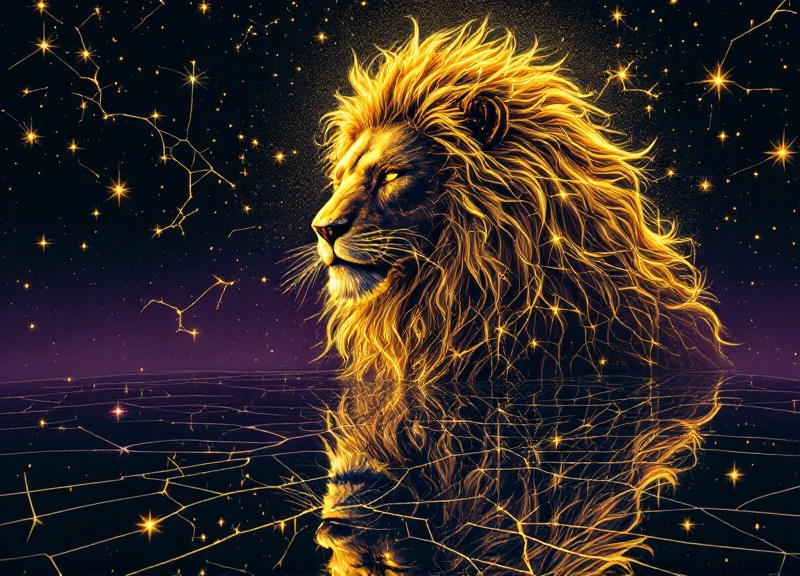
The 12-year pattern holds up remarkably well as cultural description:
Each Jupiter-in-Leo period amplified a cultural appetite for individual visibility, performed authenticity, and creative self-expression. In 2026, expect this pattern to manifest through AI-powered personal brands, creator economy launches, and what one astrologer aptly calls the "main character era."
The honest caveat: correlation is not causation. But as a descriptive pattern across three prior cycles — and I mean, seriously — it's surprisingly consistent.
Every gift casts a shadow, and Jupiter in Leo's shadow is proportional to its brightness.
The Vedic tradition flags an important asymmetry: Surya considers Guru a friend, but Guru considers Surya neutral. This one-way friendship means the transit produces genuine brightness, but carries within it the seed of excess — pride curdling generosity into performance, leadership into domination.
The Jungian perspective names the same pattern differently: ego inflation. Jupiter expands everything, including grandiosity, the insatiable need for external validation, and what Howard Sasportas described as performing love rather than feeling it.
The developmental invitation is to hold this tension — step forward into visibility while remaining honest about whose approval you're actually seeking.
To understand where this transit activates your chart specifically, identify which house Leo occupies in your natal chart. Here's a quick reference using whole-sign houses from your rising sign (ascendant):
| Rising Sign | House Activated | Core Theme |
|---|---|---|
| Aries | 5th House | Creativity, romance, children, joy |
| Taurus | 4th House | Home, roots, inner security, property |
| Gemini | 3rd House | Communication, skills, courage, siblings |
| Cancer | 2nd House | Finances, speech, family values, self-worth |
| Leo | 1st House | Identity, body, new beginnings (Guru return) |
| Virgo | 12th House | Spiritual growth, release, foreign lands |
| Libra | 11th House | Community, gains, aspirations, networks |
| Scorpio | 10th House | Career, public reputation, authority |
| Sagittarius | 9th House | Higher learning, dharma, travel, teachers |
| Capricorn | 8th House | Transformation, shared resources, research |
| Aquarius | 7th House | Partnerships, marriage, business alliances |
| Pisces | 6th House | Health, service, daily routines, healing |
For the most accurate reading, use your rising sign (ascendant), not your Sun sign. You can find yours using a birth chart calculator.
From the Vedic tradition:
From the psychological tradition:
Cross-tradition ritual for July 29, 2026 (Sun-Jupiter conjunction): Before sunrise, write in longhand — not on a screen — a single sentence beginning with: "I claim, on behalf of myself and those who could not claim it before me..." Complete it with the specific creative or courageous act you've been postponing. Burn or bury the paper. Do not photograph it. The paradox of Leo at its most evolved is that the deepest visibility begins with the most private acts of courage.
It depends on your full chart. Western astrology treats this as a collectively beneficial transit, but Vedic astrology is clear: transit results manifest fully only when your natal chart and active planetary periods (dashas) support them. Think of Jupiter in Leo as an open door — but you still need to walk through it, and your chart determines how easily you can.
Your rising sign (ascendant) determines which house Leo occupies in your chart, giving you the most specific and accurate reading. Your Sun sign offers a general flavor but less precision. You can find your rising sign through a birth chart reading. For daily horoscopes, most experienced astrologers recommend reading for your rising sign first.
Yes. A Jupiter return happens roughly every 12 years and is considered a significant moment of karmic recalibration. The Vedic recommendation is to take on a role of genuine teaching or mentorship during this period. The psychological recommendation is to honestly review what you began during your last Jupiter return and assess what matured and what didn't. Check the celebrity charts page to see examples of well-known Jupiter-in-Leo natives.
Don't worry — but do adjust your approach. The retrograde from approximately December 2026 through April 2027 isn't a reversal of Jupiter's gifts. From a Vedic perspective, retrograde Guru intensifies inward wisdom. Use this window to consolidate, refine, and deepen rather than launch new expansions. Things built too quickly during the direct phase may need structural reinforcement during the retrograde.
Yes — and this is a genuinely important distinction. The sidereal zodiac used in Vedic astrology runs approximately 23 degrees behind the tropical zodiac used in Western astrology. So when Western astrology tracks Jupiter entering Leo, Jyotish may still be tracking Guru through Cancer or early Leo in the sidereal frame. Rather than picking a winner, many practitioners work with both systems, which effectively extends the window of relevance for this transit. Explore both perspectives through your zodiac sign page.
Jupiter crosses into Leo on June 30, 2026, and remains there through July 26, 2027. This gives the transit roughly 13 months to unfold, which tends to be enough time for its themes -- creative expression, generosity, and visibility -- to move through meaningful phases rather than simply arriving all at once.
Jupiter takes approximately 12 years to complete one full orbit of the zodiac, so it returns to Leo only once in that span. Each return often brings a renewed chapter of themes connected to that sign. The word abundance is fair, though the chart suggests readiness and prior groundwork tend to shape how much of that potential actually lands.
It does not. Jupiter activates a different house of the natal chart depending on your rising sign or Sun sign, so the area of life touched -- career, relationships, home, creativity -- varies considerably. Leo placements tend to feel the transit most directly, but every sign often experiences at least a modest shift in the corresponding life area.
Expansion in Leo can tip into inflation -- overpromising, seeking recognition at the expense of substance, or mistaking boldness for preparation. Jupiter tends to amplify whatever it touches, including ego. The caution worth holding is that genuine creative confidence and performance for approval can look similar from the outside, but they tend to produce very different results.
Jupiter in Cancer, which precedes this transit, tends to favor quiet inner work -- processing emotions, strengthening roots, and building private foundations. What got composted or quietly developed during that year often becomes the material Jupiter in Leo helps bring into the open. Skipping that inner phase does not disqualify anyone, but the transit often rewards those who did that groundwork.
Ready to explore your cosmic blueprint?
Discover what the stars reveal about your unique path.
Check Your Transit ChartGet your weekly cosmic forecast
Join 10,000+ cosmic explorers


