Kimi K3 AI for Astrology Content: What You Need to Know

The Fire Came Down the Mountain
Something cracked open in the third week of July 2026, and it wasn't just a product launch (although it felt like one to many). Moonshot AI unveiled Kimi K3 — a 2.8-trillion-parameter open-weight language model — at the World Artificial Intelligence Conference in Shanghai. Within 72 hours, the conversation had migrated from the usual tech forums into astrology circles on X, YouTube, and practitioner Discords.
The questions being asked weren't the ones you'd expect. Not "will AI replace astrologers?" but something way more pointed: Can this model hold a consistent archetypal voice across an entire year-ahead guide? Will it remember the symbolic logic of a Saturn return essay by chapter four? (And honestly, this one catches people off guard.)
The early answers appear to be yes. And that's the disruption worth examining — from every angle we can bring to it.
What Kimi K3 Actually Does — and Why Astrologers Care
Before we get into mythology and planetary transits, let's anchor this in verifiable facts. Here's what Kimi K3 brings to the table and how it stacks up against what astrology content creators have been working with:
| Feature | Kimi K3 | Typical Proprietary Models (GPT-4.5, Claude 4) |
|---|---|---|
| Parameters | 2.8 trillion | Undisclosed (estimated 1-2 trillion) |
| Context Window | 1 million tokens (~750,000 words) | 128K-200K tokens |
| Open Weights | Yes (public release July 27, 2026) | No — API access only |
| Cost per Million Input Tokens | ~$3 | ~$5-8 |
| Cost per Million Output Tokens | ~$15 | ~$15-25 |
| Fine-Tuning Availability | Full (with open weights) | Limited or unavailable |
| Benchmark Rank (Artificial Analysis Intelligence Index) | 4th globally at launch | Top 3 positions held by proprietary models |
The constant complaint about AI-generated horoscopes has always been their flatness — the spreadsheet quality, the hedged language, the way symbolic meaning collapses into generic psychological advice by page three. Kimi K3's one-million-token context window tackles this at a level that genuinely matters. You can load an entire client archive, a house system reference document, years of previous readings, and a complete mythological library into a single session and receive output that stays symbolically coherent throughout.
For creators pumping out weekly columns for all twelve rising signs, extended transit guides, or comprehensive horoscope content, this cost structure and context capacity reshapes the production calculus entirely. Moonshot AI paused new subscriptions within days of launch due to what it described as "unprecedented compute strain" — and that detail alone tells you something about early adoption.
Key takeaway: Kimi K3 is not a marginal upgrade. It's the first AI model that can hold an astrologer's entire symbolic framework in working memory while generating new content — and it's about to become freely downloadable.
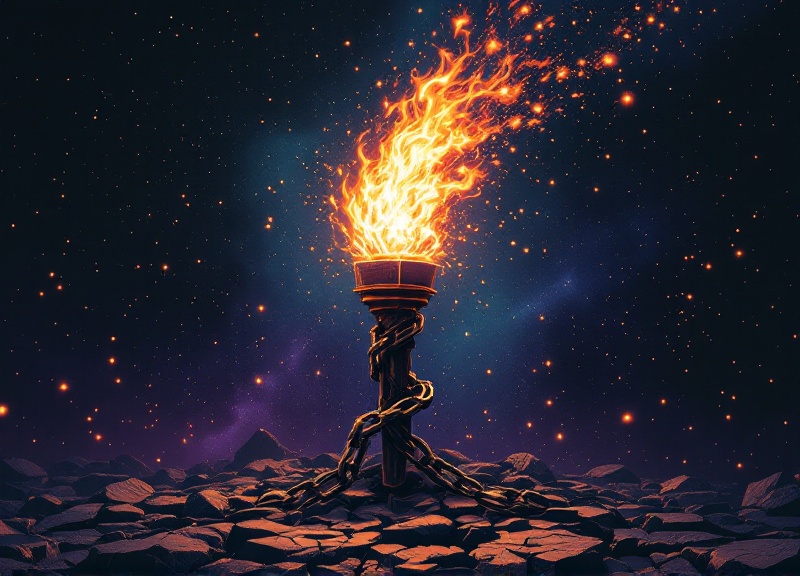
The Promethean Myth Everyone Keeps Reaching For
Here is one thing every tradition we consulted agrees on: this is a Promethean moment. Intelligence that was locked inside corporate structures — accessible only through metered, sanitized, commercially managed interfaces — has been released into the commons.
From a Jungian perspective, Prometheus doesn't simply give humanity warmth. He gives humanity the capacity to imitate the divine creative act, and with it arrives the punishment: the eagle returning each dawn — a daily reminder of the consequences. The psychological astrologer's reading of this moment lands squarely on a Uranus-Mercury archetype in full expression — Uranus shattering structures, Mercury transmitting information — amplified by Pluto's sustained passage through Aquarius.
From a Vedic lens, the parallel is even more pointed. The Vedic tradition maps this to the myth of Amrita — the nectar of immortality being claimed before the vessel has been properly purified. Power distributed without corresponding sadhana (spiritual discipline) produces tamasic (inert, obscuring) fruit, however dazzling the mechanism. And Rahu — the shadowy graha classically associated with foreign technologies, mass dissemination, and artificial mimicry of natural processes — is the planet that governs exactly what we're watching unfold.
A machine that learns to speak the language of the stars with apparent fluency is, in the nakshatra framework, a Rahu phenomenon. Ardra Nakshatra (governed by Rahu, presided over by Rudra the Storm-God) is the mansion of radical restructuring: it destroys old forms so new growth becomes possible. The disruption Kimi K3 is causing in established astrology content hierarchies is Ardra in action — fierce, not inherently harmful, but demanding conscious integration.
Where the Traditions Disagree — and Why That Matters
This is where the conversation gets genuinely interesting, because our experts don't fully agree — and the tension between their positions is worth sitting with.
The Vedic view draws a hard line on transmission. The Brihat Parashara Hora Shastra describes knowledge moving through a living chain of consciousness, filtered by the purity of the vessel carrying it. From this standpoint, AI-generated content that reaches a client without passing through a human practitioner's discernment breaks the transmission chain. The tool is permissible as a rough draft. As a final voice, it's a dharmic problem.
The psychological tradition is more permissive but no less cautious. In the lineage of Liz Greene and Howard Sasportas, the astrological reading is understood as a therapeutic encounter — the chart is a third entity in the room holding tension between practitioner and client. When AI enters that triangle, it becomes a fourth presence, one with enormous pattern-recognition capacity but no relational field. It can't notice that a client went quiet when Saturn was mentioned (which, if you think about it, makes sense). The Jungian concern isn't replacement; it's unconscious merging — surrendering the interpretive act without realizing you've done so.
The data-informed view focuses on market bifurcation. Creators who engage seriously with tools like Kimi K3 — building disciplined workflows, clear content constraints, mythic vocabulary documents — will produce more volume with tighter consistency. Those who use these tools carelessly will contribute to an already-visible flood of symbolically flat content that erodes the credibility of the practice as a whole. Neptune's ongoing presence in Aries carries a cautionary note here: Aries-flavored Neptune can inflate new tools with messianic significance before their actual limitations become clear.
The creative tension worth holding: Is AI-generated astrology content a legitimate extension of the practitioner's voice, or a fundamental break in the chain of transmission? You'll need to answer that for yourself — and your answer will shape everything about how you use these tools.
A Practical Framework for Using Kimi K3 Responsibly
Across all four perspectives we reviewed, the practical guidance converges remarkably. Oh, and there's more — here's a synthesized framework:
Set your intention before opening the tool. The Vedic tradition calls this sankalpa (sacred intention). The psychological tradition calls it casting a circle. Whatever your language: define clearly whether the AI output serves as a rough draft requiring deep human revision or as final content. The former is encouraged. The latter demands extreme caution.
Build a Symbolic Invocation Document. Create a single file — no more than 5,000 words — containing your complete interpretive philosophy: the mythic figures you assign to each planet, your preferred vocabulary, your ethical boundaries, and three examples of your writing at its best. Load this at the start of every session. The model will mirror your symbolic language with startling fidelity when given a genuine map of your cosmology first.
Treat the context window as a sacred archive, not a data dump. Feed it texts with genuine interpretive depth — classical translations, your own seasoned analyses, your tested mythological frameworks. Feed it Parashara, and it will reason from Parashara. Feed it generic sun-sign content, and it will reproduce generic sun-sign content at scale. This applies to any symbolic system, whether you're working with birth charts, compatibility readings, or transit analysis.
Write first, then prompt. Before using Kimi K3 on any chart, write one full paragraph in your own voice interpreting it. This grounds you symbolically before the model introduces its patterns into your field. Think of it as establishing who's leading the session — you or the machine.
Maintain the line between content and counsel. AI belongs in educational and content-creation contexts — blog posts, zodiac guides, thematic essays, course material. The living reading stays in the living relationship. A model cannot gauge a client's readiness to receive difficult information. It cannot read the silence after a question, and that's no small thing.
The Timing Is Almost Too Good
One insight that emerged from our cross-tradition analysis deserves its own spotlight, because it's the kind of detail that makes astrologers lean forward.
The Kimi K3 open-weights release is scheduled for July 27, 2026. That date falls within the window of the annual heliacal rising of Sirius in many latitudes — the star the Egyptians used to mark the inundation of the Nile, the annual flood that made agriculture possible. For thousands of years, this was the signal that generative abundance held back by the mountain was about to spill into the valley.
Open weights on the day the sky has historically marked the release of held abundance. Is it coincidence? Probably. Is it the kind of coincidence astrologers are trained to notice? Absolutely.
The broader Pluto in Aquarius transit — which astrologers across Western and Vedic frameworks have been reading as the radical restructuring of collective intelligence networks since 2023 — finds its most literal technological expression here. The open-source model is Pluto in Aquarius made flesh: power redistributed through networks, institutional monopoly dissolved.
The Vedic tradition adds a specific remedial note for practitioners working heavily with these tools: strengthen Mercury through the Vishnu Sahasranama recitation on Wednesdays, and balance Rahu's amplifying tendency through the Rahu mantra recited 108 times at dusk on Saturdays. These aren't superstition — they're a practitioner's method of keeping the discriminating mind sovereign over the tool rather than subordinate to it.
Frequently Asked Questions
Will Kimi K3 replace astrologers?
No — and this is one point where every tradition we consulted agrees without hesitation. A statistical model trained on text does not possess a cosmology. It doesn't hold the countertransference of a real encounter. What it does possess is the capacity to produce fluent, symbolically coherent language at scale. That fluency can accelerate your work, but it can also masquerade as depth if you're not paying attention. Sound familiar?
Do I need technical skills to use Kimi K3 for astrology content?
Right now, you can access it through Moonshot AI's API, which requires some comfort with technical tools. After the July 27 open-weight release, those with sufficient hardware will be able to fine-tune the model on their own archives — effectively training it to speak in their specific voice. For most creators, the API version with a well-crafted Symbolic Invocation Document will be more than sufficient.
Is AI-generated astrology content ethical?
This depends on context and transparency. Using AI to draft blog posts, generate daily horoscope frameworks, or synthesize research is broadly supported across traditions. Using it as the unacknowledged final voice in a personal reading crosses a line that both Vedic and psychological traditions draw clearly. Be transparent with your audience about what's AI-assisted.
What makes Kimi K3 different from ChatGPT or Claude for astrology work?
The one-million-token context window is the headline difference. Previous models lost tonal coherence and symbolic consistency over long documents. Kimi K3 can hold your entire interpretive framework, client history, and mythological references simultaneously. The open-weight release also means you can fine-tune it on your own writing — not just prompt it, but genuinely train it to think in your symbolic language.
Should I wait for the open-weight release or start with the API now?
If you're primarily a content creator cranking out blog posts and written guides, the API is already powerful enough to transform your workflow. If you want a model fine-tuned to your specific voice and framework, wait for July 27 and invest the time in proper training. Either way, build your Symbolic Invocation Document first — that's the single most impactful step regardless of which access path you choose.
Frequently Asked Questions
Does the Kimi K3 launch mean I should stop paying a human astrologer?
No. Kimi K3 is a tool for producing text, not a replacement for a relational reading. It cannot sense your reaction when a difficult transit comes up. Use it for research or draft content if you write astrology yourself, but keep a real practitioner for personal chart work and decisions.
What does the Uranus-Mercury and Rahu symbolism actually mean for me as a reader?
It signals a period where information moves faster and old gatekeeping structures loosen. Practically, expect more AI-generated horoscope content in your feed, some excellent and some flat. Treat this as a call to sharpen your own discernment about sources rather than a sign of personal fate.
If I read AI-assisted horoscopes now, am I doing something spiritually wrong?
Not inherently. The Vedic caution is about final, unfiltered output reaching you without human judgment involved. Reading AI-assisted content is fine if you know a person reviewed it. Ask writers whether a practitioner shaped the piece, and weigh the content on its clarity rather than its origin alone.
How can I tell if an astrology blog or account is using Kimi K3 responsibly?
Look for specificity and consistency across the whole piece, not generic advice that could fit any sign. Check if the writer discloses AI use, cites their own framework or lineage, and offers original interpretation rather than recycled phrasing. Flat, hedged language across many signs is a warning sign.
Does this Promethean or Ardra symbolism suggest good or bad times ahead for astrology as a field?
Both traditions describe disruption, not doom. Ardra destroys old forms so new growth can happen, and Prometheus brings power alongside consequence. Expect real change in how astrology content gets made and priced. Whether it helps you depends on choosing sources that pair the tool with human care.
Ready to explore your cosmic blueprint?
Discover what the stars reveal about your unique path.
Generate Your Birth Chart

