Moon Phases & Decisions: Weekly Astrology Timing Guide

Meta Description: Learn how moon phases affect your weekly decisions using both Vedic and Western astrology. Practical timing tips, lunar phase meanings, and actionable rituals included.
Why the Moon Is Your Built-In Decision Timer
Here's something worth sitting with: the 29.5-day lunar cycle is arguably the oldest timing system humanity has ever used. Older than calendars carved in stone, older than written language. Babylonian merchants used it to schedule debt collection. Exactly. Medieval farmers consulted lunar almanacs before planting a single seed. Your grandmother may have sworn by it for canning tomatoes.
And now, in a beautifully full-circle twist, moon phases have become one of the most popular frameworks in weekly astrology. Not because the tradition is dumbing itself down, but because people are rediscovering what ancient cultures always knew. The Moon operates on a human-scale timeline, with phases subdividing neatly into observable weekly rhythms that map almost perfectly onto how you already structure your life.
But here's where it gets interesting: different astrological traditions disagree — sometimes sharply — on how the Moon shapes your decisions and what you should actually do about it. That disagreement is where the real wisdom lives.
The Four-Phase Framework (And Why It's Only Half the Story)
If you've spent any time with astrology content, you've encountered the standard model: New Moon (set intentions), Waxing Moon (build and take action), Full Moon (culmination and clarity), Waning Moon (release and reflect). Clean. Intuitive. And genuinely useful as a starting point.
The psychological case for this framework is strong. From a Jungian perspective, the Moon symbolizes what depth psychologists call the feeling function — your capacity to orient by instinct and emotional intelligence rather than pure logic. The lunar cycle mirrors what Jung termed enantiodromia: the natural tendency for any energy pushed to one extreme to reverse toward its opposite. Expansion yields to contraction. Visibility yields to darkness. Accumulation yields to release.
This isn't mystical hand-waving. It's a description of the same oscillating rhythm that governs sleep cycles, creative processes, and even relational patterns of rupture and repair. But — and this is a significant but — reducing the Moon to four phases is like describing music as "loud, medium, quiet, and silent." Technically accurate. Practically incomplete.
Key takeaway: The four-phase model gives you a solid foundation. What follows will give you the walls, roof, and furniture.
What Vedic Astrology Adds: Tithis, Nakshatras, and Precision Timing
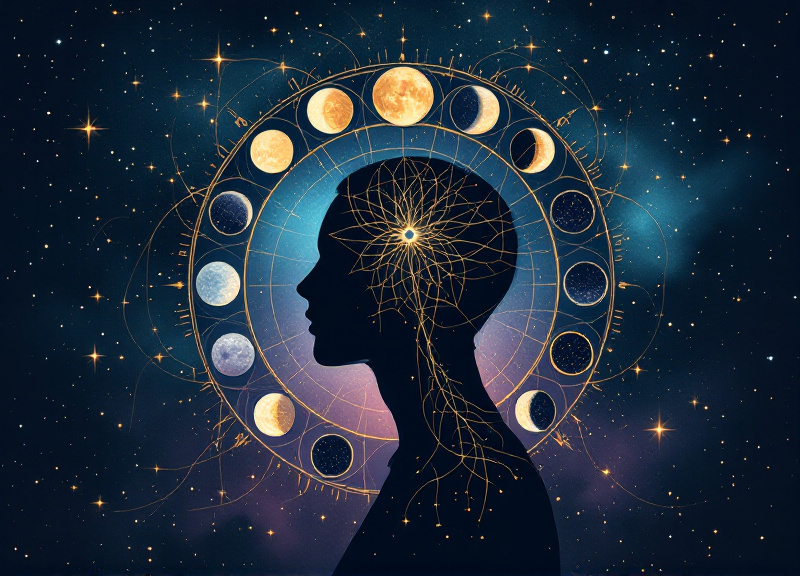
Where Western astrology counts eight phases, classical Jyotish (Vedic astrology) divides the same lunar cycle into thirty tithis — each representing a specific twelve-degree arc of separation between Sun and Moon. This isn't just more granular. It reflects a fundamentally different philosophy.
In Jyotish, the Moon isn't a symbolic clock you consult for inspiration. Chandra (the Moon) is the mind itself — the seat of perception, emotional intelligence, and moment-to-moment responsiveness. What the Moon does, you experience from the inside.
Classical texts classify the thirty tithis into five categories:
- Nanda (joyful) — 1st, 6th, 11th tithis
- Bhadra (auspicious) — 2nd, 7th, 12th tithis
- Jaya (victorious) — 3rd, 8th, 13th tithis
- Rikta (empty/inauspicious) — 4th, 9th, 14th tithis
- Purna (full/complete) — 5th, 10th, 15th (Full or New Moon) tithis
The practical difference? Knowing you're in a "waxing moon" is useful. Knowing you're in a Rikta tithi during that waxing moon — a day classical texts specifically warn against initiating important matters — is much more useful. This level of timing precision is what the Panchanga (Vedic daily calendar) was designed to provide.
The twenty-seven nakshatras (lunar mansions) add yet another layer. Each nakshatra carries a specific quality of action: Ashwini favors swift beginnings, Rohini supports creativity and material growth, Bharani asks for honest reckoning and endings. When you combine tithi quality with nakshatra energy, you get an energetic fingerprint for any given day that no generic "waxing moon equals build" framework can capture.
Here's where traditions genuinely disagree: Western astrology treats the New Moon as the ideal moment for setting intentions and beginning. Vedic astrology says not so fast. Amavasya (the New Moon day) is considered one of the least auspicious windows for worldly beginnings — potent for spiritual practice and ancestral offerings, but not for launching your new project. The classical Vedic recommendation is to wait for the first sliver of Shukla Paksha (the bright fortnight), a day or two after the New Moon, before initiating anything fresh. This distinction matters, and both perspectives have earned their authority through centuries of practice.
The Psychology of Lunar Rhythm
Whether or not you believe the Moon causes anything, behavioral research offers an interesting data point. A 2016 study in the Journal of Consumer Research documented what researchers called "the fresh start effect": people who attached goal-setting to temporal landmarks showed measurably higher follow-through. The New Moon functions as a legitimate temporal landmark — a culturally recognized reset point that your brain treats as a genuine fresh start.
A 2013 study in Current Biology found modest but measurable changes in sleep architecture correlated with lunar cycles, with subjects taking roughly five minutes longer to fall asleep and showing reduced deep sleep around the Full Moon. The sample was small and replication has been inconsistent, but it was rigorous enough to suggest that dismissing all lunar effects as pure projection is premature.
The honest position? Lunar timing provides a legitimate external rhythm for self-reflection and cyclical planning. The psychological benefits of structured timing are real. What the data doesn't support is the claim that the Moon guarantees or prevents particular outcomes. You can hold both of these truths without contradiction.
This Week's Lunar Weather: The Exhale Before Leo's New Moon
Right now, the Moon is in its waning crescent phase — the final exhale before the New Moon in Leo on August 12th. Every tradition we've consulted agrees on one thing with unusual force: you cannot plant in exhausted soil. These are not wasted days. They are the days that determine the quality of everything that follows.
From a Vedic lens, this is the tail end of Krishna Paksha (the dark fortnight). Classical guidance is clear: this window suits shodhan (purification), completing pending work, and quiet contemplation. Beginning major new enterprises during these final waning days invites the completion energy of the cycle into what you're trying to build fresh.
The Jungian perspective frames this as the liminal zone — what the alchemists called the nigredo, the darkening before reconstitution. The shadow here is real: Western culture has collectively inflated waxing and Full Moon energies (action, visibility, achievement) while deeply devaluing waning and dark moon qualities (rest, dissolution, honest assessment). When you force a major decision during a waning crescent because you feel anxious or impatient, you may be letting your ego override deeper rhythmic knowledge that something isn't yet ready.
Here's what most weekly astrology guides miss entirely: Mercury enters Leo on August 9th, forming a conjunction with Jupiter. Not quite a "communication boost." It's a convergence pointing toward one specific instruction — speak what you've been thinking but not yet voicing, then commit to it. Leo doesn't manifest in private. Your August 12th intention-setting may be most powerful when it involves another person hearing you say it aloud.
A Practical Decision-Making System by Moon Phase
Here's a synthesized framework that honors both traditions:
- Before making any decision, ask one clarifying question: Is this a day for initiating, building, clarifying, or releasing?
- Check the tithi and nakshatra if you want Vedic-level precision (free Panchanga apps make this easy). Avoid Rikta tithis for important beginnings.
- Consider your own birth chart — no lunar timing system overrides your individual natal factors or the specific moment you're in. Your birth chart is always the deeper context.
- Use the Full Moon as your accountability checkpoint. Two weeks of declared intentions arriving at a moment coded for culmination and review. By August 28th's Sturgeon Full Moon, you'll have something concrete to evaluate.
Quick-Reference: Moon Phases and Decision Types
| Moon Phase | Western Guidance | Vedic Guidance | Best Decision Types |
|---|---|---|---|
| New Moon | Set intentions, plant seeds | Spiritual practice; wait 1-2 days for worldly beginnings | Reflection, private commitments, spiritual work |
| Waxing Crescent to First Quarter | Take initial action, build momentum | Check tithi quality; Nanda and Bhadra tithis ideal | Starting projects, making calls, first steps |
| Waxing Gibbous | Refine, adjust, persist | Jaya tithis support overcoming obstacles | Problem-solving, negotiations, revisions |
| Full Moon | Culmination, clarity, celebration | Purna tithi — completion and fullness | Evaluating results, important conversations, decisions requiring emotional clarity |
| Waning Gibbous | Share, teach, distribute | Begin closing open loops | Feedback, mentoring, gratitude practices |
| Last Quarter to Waning Crescent | Release, rest, surrender | Krishna Paksha — purification, ancestral offerings, completion | Ending what isn't working, cleaning up, honest self-assessment |
The Completion Inventory: Your Pre-New Moon Ritual
Between now and August 12th, try this practice:
- Choose one area of your life — just one — and list everything that is unfinished, unacknowledged, or unresolved within it.
- Don't try to fix these things. Simply name them, the way you'd name stars in a constellation you haven't yet mapped.
- On the morning of August 12th (or a day or two after, if you prefer the Vedic approach), choose one item from that list as your single clear intention for the next lunar cycle. Not five intentions. One.
- Write it in a sentence a child could understand, then speak it aloud — to the room or to another person. Leo wants a witness.
- By the Sturgeon Full Moon on August 28th, evaluate what became visible.
For deeper Vedic support, the Chandra mantra — Om Som Somaya Namah — recited on Mondays, is classically recommended to strengthen your relationship with your own lunar intelligence. A strengthened Chandra in practice means clearer emotional discernment, which is the true foundation of good timing.
Check your daily horoscope for sign-specific guidance on how these lunar transits land for you personally.
Frequently Asked Questions
Does the Moon actually affect my decision-making, or is this just a useful metaphor?
Both perspectives have merit, and you don't have to choose. The empirical evidence for direct lunar causation on behavior is slim — but the evidence that structured cyclical planning improves decision quality is solid. Whether the Moon is the engine or the clock, the framework works. Vedic practitioners would add that Chandra literally is the mind in their system, making the question itself a category error.
Should I set intentions on the exact New Moon day or wait a day or two?
This is one of the genuine disagreements between traditions. Western astrology favors the New Moon day itself as the seed moment. Classical Vedic astrology (Muhurta tradition) recommends waiting for the first visible sliver of the waxing moon — typically one or two days later — for worldly beginnings, while reserving Amavasya for spiritual practice. A reasonable approach: use the New Moon day for reflection and clarification, then take your first concrete action a day or two after.
Can I make important decisions during a waning moon?
Absolutely — but match the decision to the energy. The waning phase is excellent for decisions about what to end, release, or restructure. It's less ideal for launching entirely new ventures. If a decision can't wait, make it — but notice whether urgency is genuine or just discomfort with pausing. Your weekly horoscope can offer sign-specific context.
How do I find out what tithi or nakshatra the Moon is in today?
Free Panchanga apps and websites display the daily tithi, nakshatra, yoga, and karana. Look for any Panchanga or Vedic calendar tool — these will show you the five elements of the day at a glance. It takes about thirty seconds to check, and it adds a layer of precision that generic phase tracking simply can't match.
What's the best way to use moon phases if I'm brand new to astrology?
Start with the four-phase model: initiate at the New Moon, build during waxing, evaluate at the Full Moon, release during waning. Track this for three full cycles (about three months) and notice your own patterns. Once that rhythm feels natural, explore your zodiac sign's relationship to the Moon and consider adding tithi awareness. Complexity is a reward for consistency, not a prerequisite.
Ready to explore your cosmic blueprint?
Discover what the stars reveal about your unique path.
Generate Your Birth Chart

